
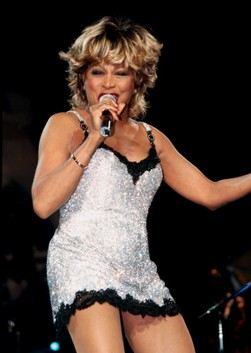
Tina Turner’s Net Worth at a Glance
Tina Turner died on May 24, 2023, at her home in Küsnacht, Switzerland, at the age of 83. At the time of her passing, her net worth was estimated at approximately $250 million — a fortune assembled across six decades through record-breaking tours, one of the most improbable comeback albums in pop history, and a well-timed catalog sale that cashed out her most valuable assets near the peak of the market.
She was born with nothing, raised in rural Tennessee, abandoned by both parents before she was a teenager, and trapped for years in a violently abusive marriage. She rebuilt her career in her mid-forties when most in the industry had written her off. That second act is, by any measure, one of the most remarkable financial recoveries in music history.
| Detail | Figure |
|---|---|
| Estimated net worth at death | ~$250 million |
| Music catalog sale to BMG (2021) | ~$50 million |
| Records sold worldwide | 200+ million |
| Competitive Grammy wins | 8 |
| Guinness World Record | Largest paying solo concert audience (1988) |
| Date of birth | November 26, 1939 |
| Date of death | May 24, 2023 |
Early Life: Nutbush, Tennessee
Anna Mae Bullock was born on November 26, 1939, in Nutbush, Tennessee — a rural farming community so central to her sense of self that she’d later name a song after it. Her father, Floyd Richard Bullock, worked as a farm overseer and served as a deacon at the Spring Hill Baptist Church. Her mother, Zelma Priscilla, worked at a local cannery.
Her parents separated when she was around 10 years old. Anna Mae and her older sister Alline moved in with their paternal grandmother, Georgiana Currie, who raised them for several years until her death. After that, the girls were split between different relatives. Anna Mae eventually joined her mother in St. Louis, Missouri, as a teenager.
St. Louis had a thriving live music scene, and a teenage Anna Mae discovered it fast. In the late 1950s, at a club in East St. Louis, she heard a band called the Kings of Rhythm, led by a guitarist and bandleader named Ike Turner. She grabbed the microphone at one of their sets — she later described it as picking it up on something close to a dare — and Ike Turner noticed immediately. Her voice was physically powerful in a way that stopped a room.
The Ike & Tina Turner Years (1958–1978)
Their first recording together, “A Fool in Love” (1960), was released under the billing “Ike & Tina Turner” and became a regional hit. A stage persona was born alongside the name: Tina Turner, backed by the Ikettes, built a reputation for a live show that was equal parts vocal performance and pure kinetic spectacle — relentless dancing, powerful belting, an energy that wore out audiences half her age.
Throughout the 1960s and early 1970s, the Ike & Tina Turner Revue was a constant presence on the touring circuit. Their wider breakthrough came through a handful of records that crossed into mainstream pop: “River Deep – Mountain High” (produced by Phil Spector, 1966), their top-ten cover of “Proud Mary” (1971), and “Nutbush City Limits” (1973), written by Tina herself.
The marriage, which she documented in her 1986 memoir I, Tina and in numerous interviews, was marked throughout by physical abuse from Ike. She finally walked away in July 1976 — mid-tour, in Dallas — with almost nothing. She asked for no money in the divorce settlement. The one thing she insisted on keeping was her stage name.
Their son Ronald “Ronnie” Renelle Turner was born in October 1960. Tina also helped raise Ike’s two sons from a prior relationship, Ike Turner Jr. and Michael Turner.
The Solo Comeback That Built Her Fortune
The years between 1978 and 1983 were genuinely hard. Turner released two solo albums — Rough (1978) and Love Explosion (1979) — that failed commercially. She toured where she could, performed on the cabaret circuit, and by some accounts took cleaning work to pay her bills. She was in her early forties, working without major label support, and the American music industry wasn’t paying attention.
Her European audience was. British fans in particular had never lost interest, and her 1983 cover of Al Green’s “Let’s Stay Together” became a genuine hit in the UK — reaching number six on the singles chart. Capitol Records in the US took notice.
The result was Private Dancer, released in May 1984. Turner was 44 years old.
The album sold more than 12 million copies worldwide, reached number three on the Billboard 200, and stayed in the top ten for 39 consecutive weeks. “What’s Love Got to Do with It” went to number one in the US — her first solo chart-topper — and won three Grammy Awards: Record of the Year, Song of the Year, and Best Female Pop Vocal Performance. “Better Be Good to Me” took Best Female Rock Vocal Performance. Private Dancer was later inducted into the Library of Congress National Recording Registry in 2019.
That album didn’t just save her career — it relaunched it at a scale she’d never previously reached. The tours and deals that followed generated the majority of her lifetime wealth.
Record-Breaking Concerts and Tours
Live performance was always the financial engine of Tina Turner’s career. She was a touring force in the late 1980s and 1990s, selling out stadiums at a time when very few female artists could.
On January 16, 1988, during her Break Every Rule World Tour, she performed for 188,000 people at Maracanã Stadium in Rio de Janeiro — setting a Guinness World Record for the highest attendance at a ticketed concert by a solo artist. The previous record had been held by Frank Sinatra, at the same stadium. Turner performed 19 songs that night in temperatures above 85°F.
She continued touring into the 2000s. Her “Twenty Four Seven” tour in 2000 was billed as her farewell, and it drew the kind of figures most artists never see once, let alone at age 60. Combined, her stadium tours across four decades generated hundreds of millions of dollars — the core of her net worth long before the catalog deal.
Business Deals and the Music Catalog Sale
In October 2021, Turner completed one of the most consequential deals of her later career: she sold the rights to her music catalog, name, image, and likeness to BMG Rights Management in a transaction widely reported to be worth approximately $50 million. The package covered her solo work across ten studio albums, two live albums, and five compilations — a catalog that had sold more than 100 million records. BMG did not officially disclose the price.
The timing was sharp. Catalog valuations were at historic highs across the music industry in 2021, driven by streaming growth and investor appetite for music assets. Turner sold near the top of that market.
Add touring revenue, record royalties, merchandise, film rights (the 1993 biopic What’s Love Got to Do with It starred Angela Bassett as Turner and introduced her story to a new generation), and the 2021 HBO/Sky documentary TINA, and the $250 million estimate at the time of her death becomes easy to account for.
Grammy Awards and Recognition
Turner won eight competitive Grammy Awards from 25 nominations across her career — a total that doesn’t include her Grammy Lifetime Achievement Award or the three recordings held in the Grammy Hall of Fame. Her wins spanned multiple categories and decades, and she was one of the few artists to win in both pop and rock categories repeatedly.
She was inducted into the Rock and Roll Hall of Fame in 1991 as part of the Ike & Tina Turner act. She was also recognized by the Kennedy Center Honors and received honorary doctorates from multiple institutions.
Personal Life
Turner’s first son, Raymond Craig Turner, was born on August 20, 1958, from her early relationship with Kings of Rhythm musician Raymond Hill. Craig worked in real estate and lived largely out of the public eye. He died by suicide in July 2018 at the age of 59 — a loss Turner described as devastating in subsequent interviews.
Her son Ronnie Turner, born in October 1960, was a musician. He died from colon cancer in December 2022, at age 62, just months before his mother’s own passing.
After her divorce from Ike Turner, Turner’s private life stayed private for years. She met German music executive Erwin Bach in the mid-1980s — he was 16 years younger — and the two were together for nearly three decades before marrying at their home on Lake Zurich in July 2013.
Turner moved to Switzerland in the 1990s and became a Swiss citizen in 2013, renouncing her US passport. She settled in Küsnacht, near Zurich, where she would spend the rest of her life.
Health Battles in Her Final Years
Turner was open about the physical toll her later years took. She suffered a stroke in 2013. In 2016 she was diagnosed with intestinal cancer. By 2017, her kidneys — damaged by years of unmanaged high blood pressure — had deteriorated to the point that she needed a transplant.
Her husband Erwin Bach donated one of his kidneys. The surgery took place in April 2017. Turner later said, in her 2020 memoir Happiness: A Journey, that she had resisted conventional medical treatment for her hypertension for years due to a personal commitment to alternative healing — and that the decision had put her life at serious risk. She was candid about the near-miss in a way that made her story useful to the millions of people living with similar conditions.
The 2021 documentary TINA — which she participated in and which covered her career and personal history in full — drew wide audiences and was widely regarded as her final public statement on her own life.
Death and Estate
Tina Turner died on May 24, 2023, at her home in Küsnacht, Switzerland. She was 83. Her death was attributed to natural causes following a prolonged illness.
She was survived by her husband Erwin Bach, and by the sons she helped raise, Ike Turner Jr. and Michael Turner. Both of her biological sons had predeceased her.
Under Swiss inheritance law — applicable because of her Swiss citizenship and residence — Bach was entitled to receive a significant portion of her estate. Reports indicated he would inherit close to half of her estimated $250 million fortune, with the remainder directed to other beneficiaries as specified in her will.
Tina Turner’s Legacy by the Numbers
- $250 million — estimated net worth at time of death
- ~$50 million — music catalog and rights sale to BMG (2021)
- 200+ million records sold worldwide
- 8 competitive Grammy wins from 25 nominations
- 12 million+ copies of Private Dancer sold worldwide
- 188,000 fans at Maracanã Stadium, Rio de Janeiro (1988 Guinness World Record)
- Inducted into the Rock and Roll Hall of Fame (1991)
Frequently Asked Questions
What was Tina Turner’s net worth when she died?
Her net worth at the time of her death in May 2023 was estimated at approximately $250 million, according to multiple sources including Celebrity Net Worth.
How did Tina Turner earn her money?
The majority of her wealth came from touring revenue and record sales built across four decades of performing, with the largest single transaction being the approximately $50 million sale of her music catalog and likeness rights to BMG in 2021.
Who inherited Tina Turner’s estate?
Her husband Erwin Bach was the primary beneficiary. Under Swiss law, he was entitled to receive close to half of her estimated $250 million estate. Bach had also donated a kidney to save her life in 2017.
How many Grammys did Tina Turner win?
She won 8 competitive Grammy Awards. She also holds a Grammy Lifetime Achievement Award and has recordings inducted into the Grammy Hall of Fame.
When and where did Tina Turner die?
Tina Turner died on May 24, 2023, at her home in Küsnacht, Switzerland. She was 83 years old.
Did Tina Turner have children?
She had two biological sons — Craig (1958–2018) and Ronnie (1960–2022) — both of whom died before her. She also helped raise Ike Turner’s sons Ike Jr. and Michael.