
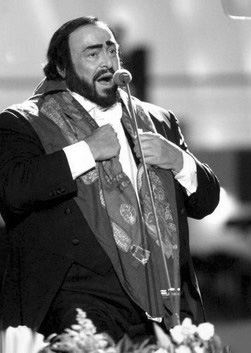
When Luciano Pavarotti died in September 2007, headlines around the world called him the most famous opera singer since Enrico Caruso. They also raised a question that surprised many fans: how could a man who had earned a reported fortune die owing tens of millions? Pavarotti’s net worth is one of opera’s great paradoxes — a story of enormous earnings, generous living, and a messy estate that took his family years to untangle. Here is what he was actually worth, where the money came from, and the life that built it.
Luciano Pavarotti’s net worth: the short answer
At the time of his death on 6 September 2007, Luciano Pavarotti’s net worth was estimated at roughly $275 million, according to Celebrity Net Worth. That figure reflects a career that made him the highest-paid classical performer in history — but it tells only half the story.
When Italian courts opened his estate, filings valued his assets at as much as €300 million before debts. Against that sat about €18 million in liabilities: roughly €11 million of overdrawn bank accounts and another €7 million in unpaid mortgage and loan payments, as reported by CBC News and other outlets citing the court documents. The gap between the headline number and the cash on hand is what made his estate so contentious.
Quick facts
| Full name | Luciano Pavarotti |
| Born | 12 October 1935, Modena, Italy |
| Died | 6 September 2007 (aged 71), Modena, Italy |
| Profession | Operatic tenor |
| Nickname | “King of the High Cs” |
| Signature aria | “Nessun dorma” (from Puccini’s Turandot) |
| Records sold | More than 100 million |
| Estimated net worth (2007) | ~$275 million (gross estate up to €300 million, less ~€18 million debt) |
Where the money came from
Pavarotti didn’t get rich the way most opera singers do, because most opera singers don’t get rich at all. He did it by taking the art form out of the opera house and selling it to the size of audience usually reserved for rock stars. A few revenue streams did the heavy lifting:
- Recordings. He sold more than 100 million records over his career. The 1990 The Three Tenors in Concert album became, and remains, the best-selling classical album of all time — the kind of crossover hit that pays for decades.
- Stadium and arena concerts. His solo “Pavarotti in the Park” events drew 150,000 to London’s Hyde Park and an estimated half a million to New York’s Central Park, with global broadcast deals attached.
- The Three Tenors tours. The concerts with Plácido Domingo and José Carreras, timed to the FIFA World Cup, were among the most lucrative live classical events ever staged.
- “Pavarotti & Friends” benefit concerts. His annual Modena charity shows paired him with Sting, Bono, Elton John, Celine Dion and others, blending fundraising with sold-out crossover appeal.
The flip side: Pavarotti lived as large as he sang. Lavish homes, an entourage, expensive horses and the costs of a very public divorce all drew down the fortune, which is how a man who earned hundreds of millions could still leave debts behind.

Who was Luciano Pavarotti?
Luciano Pavarotti was an Italian operatic tenor widely regarded as one of the finest of the 20th century, and the singer who did more than anyone to carry opera into popular culture. His warm, ringing tone and effortless top register earned him the nickname “King of the High Cs,” while his showman’s instinct — the white handkerchief, the beaming grin, the open-air spectacles — made him a household name far beyond classical circles. He won multiple Grammy Awards and received the Grammy Legend Award in 1998. He died of pancreatic cancer in 2007.
Childhood in Modena
Pavarotti was born on 12 October 1935 in Modena, in Italy’s Emilia-Romagna region, the only son among the children of Fernando Pavarotti, a baker and keen amateur tenor, and Adele Venturi, who worked in a cigar factory. Money was tight, and when the Second World War forced the family out of the city in 1943, they rented a single room in the countryside and farmed to get by.

Music was in the house from the start. His father’s record collection — Caruso, Beniamino Gigli, Tito Schipa — became young Luciano’s first teachers, and Fernando took him along to sing in the local church choir. As a boy he loved football nearly as much as singing and dreamed of playing in goal. His mother steered him toward something safer, and he trained as a teacher, spending a couple of years in an elementary-school classroom before deciding the stage was worth the risk.
The long climb to a career
Pavarotti began serious study around 1954 with the Modena tenor Arrigo Pola, who taught him for free because the family couldn’t pay, and later with Ettore Campogalliani. Progress was slow and money was nonexistent; for years he earned almost nothing and supported himself with part-time work. A bout of what he feared was a career-ending vocal problem nearly made him quit, before the voice returned with the bright, focused quality that would define it.

The breakthrough came in 1961, when he won an international vocal competition and made his professional operatic debut on 29 April as Rodolfo in Puccini’s La bohème at the Teatro Municipale in Reggio Emilia. It would remain one of his signature roles. In 1963 his international career took off almost by accident: he stepped in for an ailing Giuseppe Di Stefano as Rodolfo at London’s Royal Opera House, Covent Garden, and stopped the show.

How Pavarotti became the “King of the High Cs”
The nickname came from a single, legendary night. Pavarotti made his La Scala debut in Milan on 28 April 1965, in Franco Zeffirelli’s production of La bohème — Herbert von Karajan conducting, his childhood friend Mirella Freni singing Mimì. Karajan had asked for him personally, and that vote of confidence put him on opera’s main stage.

The title itself was earned in New York. On 17 February 1972, at the Metropolitan Opera, Pavarotti sang Tonio in Donizetti’s La fille du régiment (“The Daughter of the Regiment”) opposite Joan Sutherland — and nailed all nine high Cs of the aria “Ah! mes amis,” a passage tenors treat as a Mount Everest. The crowd called him back for seventeen curtain calls, and the press crowned him “King of the High Cs.” His other celebrated roles included the Duke of Mantua in Rigoletto, Manrico in Il trovatore, and Radamès in Verdi’s Aida.

The Three Tenors and the leap to superstardom
Pavarotti’s transformation from celebrated tenor to global icon happened on one evening: 7 July 1990, at the ancient Baths of Caracalla in Rome, on the eve of the World Cup final. Joined by Plácido Domingo and José Carreras, with Zubin Mehta conducting, he sang to a worldwide television audience in the hundreds of millions. The recording of that concert became the best-selling classical album ever made and is listed in the Guinness World Records as such.

The Three Tenors reunited for the 1994, 1998 and 2002 World Cups, and Pavarotti built on that momentum with his own “Pavarotti & Friends” benefit concerts in Modena, sharing the stage with pop stars to raise money for humanitarian causes. Purists grumbled that he had cheapened the art form by taking it to stadiums and football crowds. He filled Hyde Park, Central Park and the Champ de Mars in Paris anyway, introducing opera to millions who would never have bought a ticket to La Scala. Back in 1988 he had already set a Guinness World Records mark in Berlin, taking 165 curtain calls after a performance of Donizetti’s L’elisir d’amore.
Wives, children and personal life
In 1961 Pavarotti married Adua Veroni, whom he had met as a fellow voice student. Their marriage lasted nearly four decades and produced three daughters: Lorenza (born 1962), Cristina (1964) and Giuliana (1967).

In his sixties Pavarotti began a relationship with Nicoletta Mantovani, his assistant, who was 34 years his junior. He and Adua divorced in 2000, and he married Mantovani in 2003. That same year the couple had twins; their daughter Alice survived, but her brother Riccardo died shortly after birth. Pavarotti spent his final years with Nicoletta and Alice.

Illness, final performances and death
Pavarotti gave his last staged operatic performance on 13 March 2004, singing Mario Cavaradossi in Puccini’s Tosca at the Metropolitan Opera in New York; the audience held its ovation for more than ten minutes. His farewell tour followed, and his final public appearance came on 10 February 2006, when he closed the opening ceremony of the Turin Winter Olympics with “Nessun dorma.” Years later, the conductor Leone Magiera revealed in his memoirs that, with the singer too frail and the night too cold to risk it, the performance was pre-recorded and Pavarotti mimed it — a detail that does nothing to diminish how the moment moved the crowd.
In July 2006 he was diagnosed with pancreatic cancer and underwent surgery. After months of treatment he was readmitted to hospital, and on 6 September 2007 he died at his home in Modena, aged 71. His body lay in the city’s cathedral for two days as mourners filed past, and he was buried in the family tomb at Montale Rangone, near Modena.

What happened to his estate?
The estate was complicated by the gap between his fame and his finances, and by the fact that he had remarried late and fathered a child outside his first marriage. Under Italian inheritance law, all four of his daughters and his widow had claims. The dispute pitted Nicoletta Mantovani against the three daughters from his first marriage for a time, but in 2008 the parties reached a settlement that divided the estate. The villa on the Adriatic coast went to Lorenza, Cristina and Giuliana, while assets were apportioned among all the heirs. The lawyer who brokered the deal stressed that the daughters fully regarded young Alice as their sister.
Legacy
Pavarotti’s recorded catalogue keeps his estate earning, and his influence is hard to overstate: he proved that opera’s grandest voice could fill a football stadium without losing an ounce of artistry. Modena placed a bronze statue of him outside its municipal theatre, memorial concerts are held in his name, and director Ron Howard’s 2019 documentary Pavarotti introduced him to a new generation. For all the noise about his debts, the asset that mattered most — the voice — remains priceless.
Frequently asked questions
What was Luciano Pavarotti’s net worth when he died?
His net worth is commonly estimated at around $275 million. Italian court filings valued his gross estate at up to €300 million, but it carried roughly €18 million in debts, including overdrawn accounts and unpaid mortgage payments.
How did Pavarotti make his money?
Primarily through record sales of more than 100 million copies, lucrative stadium concerts, the Three Tenors tours, and “Pavarotti & Friends” events. He was the highest-paid classical performer of his era.
Why was Pavarotti called the “King of the High Cs”?
At the Metropolitan Opera on 17 February 1972, he hit all nine high Cs in the aria “Ah! mes amis” from Donizetti’s La fille du régiment, a feat so rare the press gave him the nickname.
How many records did Pavarotti sell?
More than 100 million. The 1990 Three Tenors in Concert album remains the best-selling classical record of all time.
How did Luciano Pavarotti die?
He died of pancreatic cancer on 6 September 2007 at his home in Modena, Italy, aged 71, about a year after his diagnosis.
Key dates
- 1935 — Born 12 October in Modena, Italy.
- 1961 — Wins an international competition; debuts as Rodolfo in La bohème at Reggio Emilia. Marries Adua Veroni.
- 1963 — Steps in at Covent Garden in London; international career begins.
- 1965 — La Scala debut under Herbert von Karajan, with Mirella Freni.
- 1972 — Nine high Cs at the Met; becomes “King of the High Cs.”
- 1988 — Sets a Guinness record with 165 curtain calls in Berlin.
- 1990 — First Three Tenors concert in Rome; the album becomes the best-selling classical record ever.
- 1998 — Receives the Grammy Legend Award.
- 2000 — Divorces Adua Veroni.
- 2003 — Marries Nicoletta Mantovani; twins born, daughter Alice survives.
- 2004 — Final staged opera (Tosca) at the Met.
- 2006 — Final public appearance at the Turin Winter Olympics.
- 2007 — Dies 6 September of pancreatic cancer in Modena.