
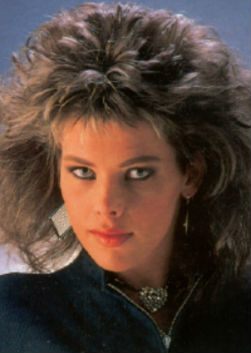
C.C. Catch’s net worth is estimated at around $8 million, according to Celebrity Net Worth. That figure is an unofficial estimate — the singer has never published her finances, and other sites quote numbers as high as $25 million — but $8 million is the most consistently cited figure. The fortune comes from a 1980s run of multi-platinum Euro-disco albums, decades of near-constant touring across Europe and the former Soviet states, and the long royalty tail of songs that still fill dance floors 40 years later.
Here’s the fuller picture: who she is, how she earned it, and what she’s doing now.
C.C. Catch at a glance
| Real name | Caroline Catharina Müller |
| Stage name | C.C. Catch |
| Born | 31 July 1964, Oss, North Brabant, Netherlands |
| Nationality | Dutch-German |
| Genre | Euro-disco, synth-pop, Eurodance |
| Active years | 1985–present (with a 1991–1998 hiatus) |
| Best known for | “I Can Lose My Heart Tonight,” “Heaven and Hell,” “Cause You Are Young” |
| Estimated net worth | ~$8 million (unofficial) |
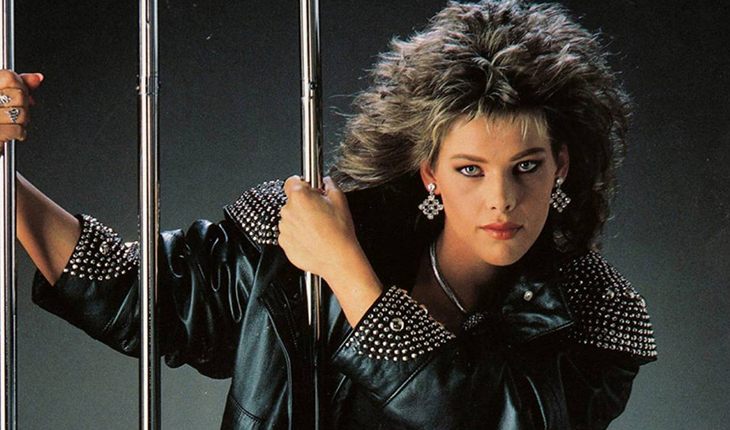
Who is C.C. Catch?
C.C. Catch is a Dutch-born German pop singer who became one of the defining voices of mid-1980s Euro-disco. Working with producer Dieter Bohlen — one half of Modern Talking — she released a string of singles that charted across Germany, Scandinavia, and Eastern Europe between 1985 and 1989. Decades on, tracks like “I Can Lose My Heart Tonight” remain staples of 80s radio and retro dance nights.
Early life and childhood
Caroline Catharina Müller was born on 31 July 1964 in Oss, in the Dutch province of North Brabant, to a German father and a Dutch mother. Her family included three younger brothers. For her first 14 years she rarely saw her father, who lived and worked in Germany while she and her mother stayed in the Netherlands — so her childhood was a run of new towns, new schools, and new classmates, with her mother as the one constant.
After finishing elementary school in Holland, she enrolled in a domestic-science course that taught cooking, cleaning, and basic retail work. She was a strong student, but the prospect of a homemaker’s life held no appeal. When the family finally reunited in West Germany in the late 1970s, she switched schools and began learning in German — a language she barely spoke at the time — before her parents steered her toward training as a seamstress.

The garment factory turned out to be grueling: long shifts, sometimes 15 hours a day, under a boss she remembered as harsh. Her one escape was a small music tavern in town, and it was there — watching performers up close — that she first imagined doing it herself.
From talent contests to the group Optimal
Her parents backed the idea, even though they still expected her to end up a dressmaker. She took guitar lessons, went to jazz-dance classes, and entered every local talent contest she could find. “Competitions helped me a lot,” she later said. “I learned to stand on stage, I got used to the public.” She gave her first public performance in February 1982.
Her father committed completely. He left his own job, sank his savings into a small music agency to manage her career, and bought her a microphone and backing tracks of the day’s hits so she could rehearse at home from morning to night. That early gamble — a parent betting the family’s stability on a teenager’s ambition — is a big part of why the career got off the ground at all.

The break came when producer Peter Kent recruited her into the female German quartet Optimal, which released its debut single “Er War Magnetisch” in 1983. Group life was a tough apprenticeship. “It was very hard, a real school of survival,” she said years later. “I don’t miss those times at all. It’s so great to work solo.”
Discovery by Dieter Bohlen and the birth of “C.C. Catch”
In 1985, while Optimal was performing near Hamburg, Dieter Bohlen spotted Müller as the most magnetic member of the group and invited her to his studio. He signed her, and gave her the punchy stage name that stuck: the two C’s stand for the initials of Caroline Catharina, and “Catch” was simply the hook that sounded right alongside them.

Solo stardom: the albums and hits that built the fortune
Her 1985 debut single, “I Can Lose My Heart Tonight,” broke across the European charts and announced her as a solo star. What followed was one of the most productive runs of the Euro-disco era — four studio albums and a greatest-hits collection in barely three years, all produced by Bohlen and Luis Rodríguez.
- Catch the Catch (April 1986) — her debut album, anchored by “I Can Lose My Heart Tonight” and “Cause You Are Young.”
- Welcome to the Heartbreak Hotel (December 1986) — a commercial success driven by the singles “Heaven and Hell” and “Heartbreak Hotel.”
- Like a Hurricane (October 1987) — propelled by “Are You Man Enough” and “Soul Survivor.”
- Big Fun (December 1988) — featuring “Backseat of Your Cadillac.”
- Diamonds: Greatest Hits 84–88 (1988) — a compilation capping off her peak years.
That catalogue of singles, twelve in total, kept her near the top of the charts and on tour throughout the decade — and those recordings are the engine still generating royalties and streaming income today.
Splitting from Bohlen and “Hear What I Say”
By the end of the 1980s, the creative relationship had soured. Bohlen, she said, refused to entertain her own ideas. She respected what he taught her but found him impossible to work under:
“Dieter Bohlen has an unbearable character; he is very authoritarian. But it was he who instilled in me a taste for good music, for which I am grateful to him.”
Reclaiming the stage name she’d made famous reportedly took months of wrangling. A new mentor arrived almost by chance: at a New Year’s television appearance in Spain, she met Simon Napier-Bell, the former manager of Wham!’s George Michael, who signed her to PolyGram’s Metronome label.
The result was Hear What I Say, released in late 1989 — her fifth and, to date, final studio album. She co-wrote seven of its tracks, fulfilling a long-held ambition, and worked with new producers including Andy Taylor (ex-Duran Duran), Dave Clayton, and Jo Dworniak. It sold respectably but didn’t match the chart heights of her Bohlen-era hits.
The career break
After parting with Metronome, C.C. Catch stepped away from music in 1991. She spent roughly seven years on family and personal pursuits, taking up yoga and meditation and writing poetry. The pull of performing eventually won out.
The comeback
As late-90s Europe rediscovered its appetite for disco, C.C. Catch returned in 1998 — fittingly, with Bohlen’s help on reworked versions of her old hits, this time layered with harder beats and rap. The compilation Best of ’98 marked the relaunch. Her look had changed too: the curly brunette of the 80s came back as a sleek blonde.

Her real second act, though, was live. Through the 2000s she headlined “all the stars of the 80s” disco revival shows across Europe’s biggest venues and toured heavily in Russia and the former Soviet states, sharing bills with regional stars. The video for her song “Silence” was filmed in St. Petersburg, a city she fell for after celebrating her 40th birthday there. In 2003 she covered “Shake Your Head,” and in 2007 she received the honorary Order of the Peacemaker for her contribution to cultural exchange. This nostalgia-circuit touring — not new record sales — has been her main income source for the past two decades.
Personal life
C.C. Catch has kept her private life guarded, especially after an early relationship with Aquamarine drummer Frank Otto ended painfully. She married for the first time at 34, to a meditation and yoga teacher she met in London; she has never publicly named him, and the marriage ended after a few years. In a 2018 interview she said she still receives plenty of romantic offers but is content focusing on herself.
Asked about staying youthful, she has downplayed any elaborate routine — an ordinary drugstore moisturizer, plenty of water and tea, no coffee, meat, or alcohol, regular meditation, and as much sleep as she can get. “The rest,” she said, “is an attitude to life. I try to just be grateful for what I have today.”
C.C. Catch now
Well into the 2020s, C.C. Catch still performs and tours, billed as a “queen of disco” on the European and Russian retro-festival circuit with new programs and elaborate stage shows. In recent interviews she has hinted she may eventually wind down show business to spend more time at home, and has spoken about wanting to write a book, though she hasn’t settled on a subject. For now, the live shows continue.
How did C.C. Catch make her money?
Three streams, roughly in order of importance over her career:
- 1980s record sales — five albums and a greatest-hits set, several certified across Europe, recorded during her commercial peak.
- Live touring — four decades of concerts, and an especially lucrative run on the 80s-revival circuit in Europe and the former USSR from the late 1990s onward.
- Royalties and licensing — ongoing income as her catalogue gets played on radio, streamed, and licensed for compilations.
Frequently asked questions
What is C.C. Catch’s real name?
Caroline Catharina Müller. The stage name “C.C. Catch,” coined by Dieter Bohlen, uses the initials of her first and middle names.
How old is C.C. Catch?
Born on 31 July 1964, she is 61 years old as of 2026.
Is C.C. Catch Dutch or German?
Both. She was born in Oss, Netherlands, to a Dutch mother and a German father, and moved to West Germany as a teenager. She holds Dutch-German heritage.
What is C.C. Catch’s most famous song?
Her 1985 debut single “I Can Lose My Heart Tonight” is her signature track, alongside “Cause You Are Young” and “Heaven and Hell.”
Is C.C. Catch still performing?
Yes. She continues to tour the European and Russian retro-disco circuit, though she has suggested she may eventually retire from show business.
How much is C.C. Catch worth?
Estimates vary widely. Celebrity Net Worth lists roughly $8 million; some other outlets cite higher figures. All such numbers are unofficial, as the singer has never disclosed her finances.