

Gambling is older than most currencies and has outlasted nearly every government that tried to ban it. The global casino industry generated more than $171 billion in revenue in 2025, with the online segment growing at 11% annually — and yet the core human impulse behind all of it, the wager, has barely changed since Roman soldiers cast lots for a tunic.
This article traces that arc: from ancient dice games through the baroque splendor of Venice’s first licensed casino, across the Nevada desert to Las Vegas, and into the era of AI-driven platforms and blockchain-verified fairness. Each phase of the industry’s evolution was shaped by technology, regulation, and an audience that kept finding new ways to play.
Ancient Origins: The First Gamblers
The earliest confirmed gambling artifacts are dice made from sheep knucklebones — called astragali — found at archaeological sites across the ancient Near East and Egypt, dating back more than 5,000 years. China documented tile-based games of chance as early as 2300 BCE, and ancient Indian texts reference betting on dice outcomes. The Romans were particularly enthusiastic: gambling was so widespread in Rome that the city periodically banned it, restricting wagers to the Saturnalia festival before giving up on enforcement altogether.
Playing cards emerged in Tang Dynasty China around the 9th century CE and traveled westward along trade routes. By the 14th century, card games had taken hold across Europe, popular with nobles and clergy alike despite periodic church condemnation. French, German, and Italian decks developed different suit systems over this period — many of which still appear in today’s games.
What didn’t exist yet was a dedicated physical space for organized gambling. Players wagered in taverns, private homes, market squares, and festival grounds. The idea that a government might sanction, regulate, and profit from a permanent gambling venue was still centuries away.
The World’s First Licensed Casino: Venice’s Ridotto (1638)
Venice’s Great Council had spent decades issuing edicts against gambling and watching them be ignored. In 1638, it tried something different: instead of banning games it couldn’t stop, it opened a state-controlled venue where citizens could play them legally, under supervision, with a cut going to the public treasury. The Ridotto, housed in the prestigious Palazzo Dandolo near the church of San Moisè, became the first public casino in the Western world.
Entry came with a strict dress code — players wore the traditional Venetian bauta mask, men wore tricorn hats — and the stakes were high enough to effectively bar all but the wealthiest residents. The games on offer included biribi, a lottery-style game, and bassetta, a card game with roots in earlier Italian gambling traditions. The Ridotto operated for 136 years before the Great Council shuttered it in 1774, concluding that it had become too ruinous to Venetian noble families.
The model it established outlasted its own closure. State-licensed gambling in a dedicated venue, with defined rules and a built-in house edge, is the template every modern casino still follows.
The Spread of Gambling Houses Across Europe
After Venice, gambling didn’t retreat — it proliferated. Across France, Germany, and the principalities along the Rhine, private gaming rooms called “casinos” (the Italian word for a small house or social club) opened for aristocratic clientele. Baden-Baden’s casino, established in the early 19th century, drew royalty and literary figures. Dostoyevsky’s The Gambler is partly autobiographical, drawn from the German spa-town casino circuit where he lost his earnings repeatedly before writing about it.
Monte Carlo set the benchmark in 1863, when Prince Charles III of Monaco partnered with developer François Blanc to build the Casino de Monte-Carlo as a revenue source for a cash-strapped principality. It worked: the casino funded public infrastructure, abolished taxes for Monégasque citizens, and created a template of luxury gambling-as-destination that Las Vegas would refine a century later.
By the end of the 19th century, large parts of Europe had banned or heavily restricted casino gambling — Britain’s Gaming Act of 1845 is one example — which pushed high-stakes play underground or toward the few legal venues that remained. The tension between prohibition and demand would replay itself in the United States with even higher stakes.
Nevada’s Bet: How Las Vegas Became the World’s Casino Capital

On March 19, 1931, Nevada Governor Fred Balzar signed Assembly Bill 98, legalizing commercial gambling statewide. The state was in financial freefall during the Great Depression, losing population and desperate for economic activity. Twelve days after the bill was signed, the Clark County Commission issued its first eight casino licenses — most of them to businesses crowded along Fremont Street in downtown Las Vegas.
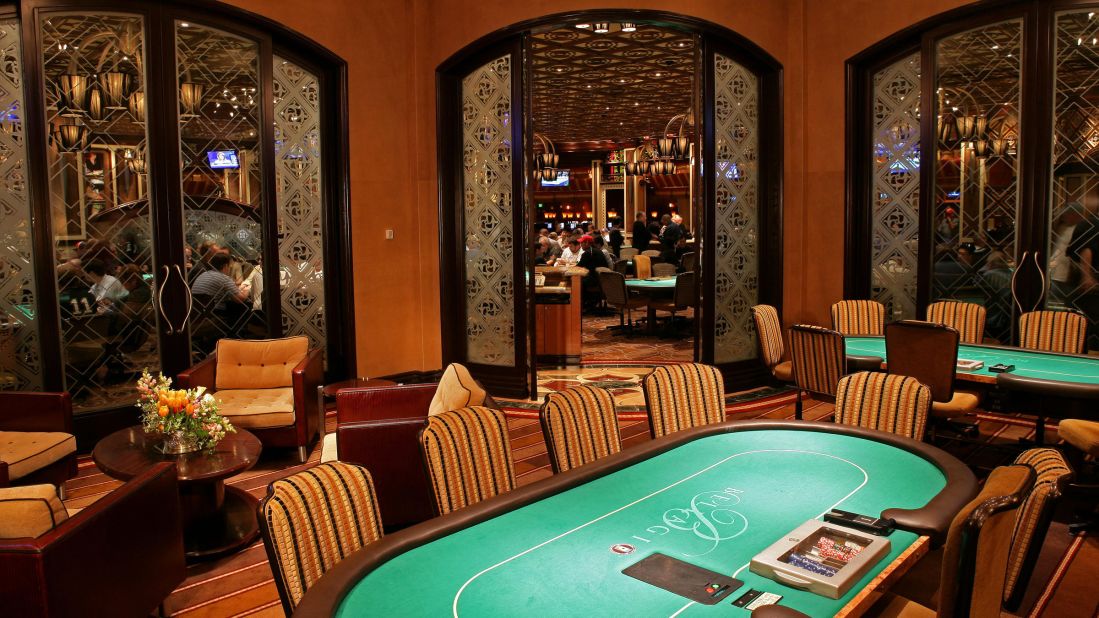
The Strip took shape a decade later. The El Rancho Vegas opened on April 3, 1941, as the first hotel-casino on what would become Las Vegas Boulevard. Bugsy Siegel’s Flamingo followed in 1946, bringing a new standard of resort luxury — and a fair amount of organized crime money — to the desert. The hotel-casino format, combining gambling with accommodation, entertainment, and dining under one roof, became the dominant model for the next seventy years.
Expansion spread beyond Nevada’s borders steadily. Atlantic City legalized casino gambling in 1976. The Indian Gaming Regulatory Act of 1988 opened the door to tribal casinos, eventually creating one of the largest segments of the domestic market — more than 500 tribal gaming operations now operate across the United States. Through the 1990s, riverboat casinos launched across the Mississippi Valley as states from Iowa to Louisiana passed legislation to capture tax revenue. Nevada’s 1931 decision had, over six decades, reshaped gambling across an entire continent.
The Online Revolution: Gambling Moves to the Screen

The first online casinos launched in 1994 and 1995, following Antigua and Barbuda’s passage of the Free Trade and Processing Act, which created the first licensing framework for online gambling operators. Microgaming and Cryptologic built the earliest platforms — basic by current standards, but remarkable in that a player could now place a real-money bet without stepping into a physical casino.
The U.S. market operated in a legal grey zone until the Unlawful Internet Gambling Enforcement Act of 2006, which restricted financial transactions tied to online betting and drove many operators offshore. European markets, particularly the UK following its Gambling Act of 2005, moved toward structured licensing that became models for other jurisdictions.
Mobile shifted the landscape again. Smartphone adoption in the late 2000s moved online gambling from desktop browsers to apps and mobile-optimized sites. By 2025, mobile and tablet devices accounted for 57% of online gambling revenue globally — the casino had effectively moved into people’s pockets.
Live dealer games arrived as a bridge between digital convenience and physical authenticity. Streaming a real dealer operating a real blackjack or roulette table directly to a player’s screen — with full interaction via chat — addressed the trust gap that standard random number generators left open. Players could see the cards being dealt. That turned out to matter enormously for adoption.
Today’s Casino Industry: AI, Crypto, and a $171 Billion Market

The global casino gambling market reached $171.3 billion in 2025, with the broader gambling sector — including lotteries, sports betting, and bingo — exceeding $643 billion. Online gambling alone was valued at $88 billion in 2025 and is projected to reach roughly $202 billion by 2033 as more jurisdictions legalize and regulate digital platforms. Three forces are doing the most to change how the industry works right now.
Artificial Intelligence
AI has moved well past the experimental stage in casino operations. More than 70% of licensed online casinos now use AI-driven behavioral analytics for compliance and fraud detection. On the player side, the same technology personalizes game recommendations and bonus offers based on individual playing history. Perhaps most significantly, AI is being deployed for responsible gambling monitoring — flagging behavioral patterns that suggest problem gambling before players self-identify or seek help. Regulators in Europe and North America have begun treating this capability as a licensing expectation rather than an optional feature.
Cryptocurrency and Blockchain
Crypto gambling now accounts for roughly 17% of all iGaming bets globally, up from negligible levels five years ago. The primary draw is transactional: crypto withdrawals at online casinos typically settle in minutes rather than the days traditional banking requires. Blockchain-based “provably fair” verification lets players independently confirm that game outcomes weren’t manipulated — addressing a trust problem that standard random number generators never fully resolved.
Stablecoins, particularly USDT and USDC, are the fastest-growing payment method in the space. They give players the speed and privacy of crypto without the price volatility that historically kept casual gamblers away from Bitcoin-denominated wagers.
Regulation as a Growth Driver
The assumption that regulation shrinks gambling markets has largely inverted. Clear licensing frameworks in U.S. states, across Europe, and in parts of Latin America have opened large new markets while pushing unregulated offshore operators to the margins. Operators have found that players in regulated markets spend more, not less, when they trust the platform — legal clarity turns out to be good for business on both sides of the transaction.
What the Next Decade Holds
Several trends are already moving fast enough to shape the industry’s next phase:
- Crypto gambling scale: The crypto gambling market is on pace to surpass $65 billion by 2026, growing at roughly 12–15% annually. Regulatory clarity around crypto payments in key markets will determine how quickly this consolidates into mainstream casino operations rather than remaining a niche segment.
- Immersive technology: VR casinos have been “coming soon” for years, but hardware costs are dropping and headset adoption is growing. The more immediate development is augmented reality in mobile gaming, which several operators have already deployed in limited form.
- Asia-Pacific growth: The region is one of the fastest-growing gambling markets globally, driven by high mobile penetration and younger demographics. Japan legalized integrated casino resorts in 2018 and is slowly advancing toward implementation, representing significant new supply coming online in a market that has historically had little legal domestic gambling infrastructure.
- Responsible gambling as baseline: The direction of travel across major regulatory jurisdictions is clear — AI-powered monitoring, deposit limits, and self-exclusion tools are shifting from optional differentiators to mandatory operating requirements. Operators who build this infrastructure early are better positioned as rules tighten.
The casino industry has navigated bans, depressions, wars, and the internet — and adapted to all of them. The specific games and platforms keep changing; the fundamental business of managing risk, offering entertainment, and maintaining a consistent house edge has proved remarkably durable across roughly 400 years of formalized operation.
Frequently Asked Questions
What was the world’s first casino?
The Ridotto in Venice, which opened in 1638, is considered the first state-sanctioned public casino in the Western world. It operated in the Palazzo Dandolo and ran for 136 years until the Great Council of Venice closed it in 1774 on moral and social grounds.
When did Las Vegas become a casino destination?
Nevada legalized commercial gambling in March 1931, and Las Vegas issued its first casino licenses that same month. The hotel-casino Strip began taking shape in 1941 with the opening of El Rancho Vegas, the first resort property on Las Vegas Boulevard, and accelerated through the 1940s and 1950s as major properties followed.
How large is the global online casino market?
Online gambling was valued at approximately $88 billion in 2025. Analysts project the market will grow to around $97.7 billion in 2026 and could reach $202 billion by 2033, driven primarily by mobile gaming and continued expansion of regulated markets.
Are crypto casinos legal?
It depends on the jurisdiction. Crypto casinos licensed in regulated markets — Malta, the UK, Gibraltar, and U.S. states with legal online gambling — operate legally. Many unregulated crypto casinos also operate offshore in legal grey areas. The regulatory landscape is shifting quickly as governments develop specific frameworks for crypto-based gambling payments, so the picture varies considerably by country.