
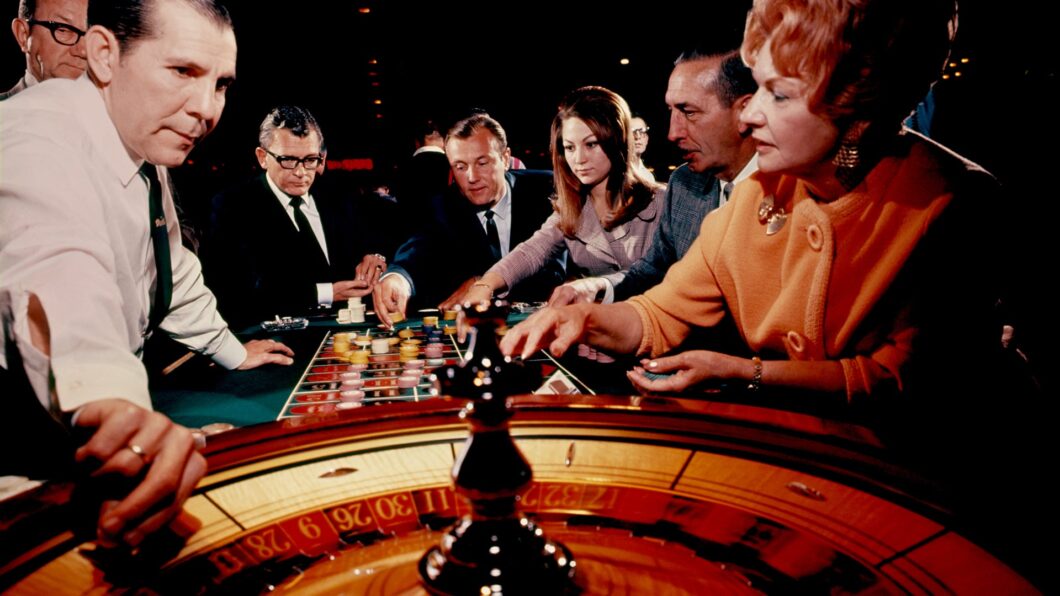
Most people picture Las Vegas when they think of casinos. But organized gambling predates neon lights by roughly 5,000 years — from sheep knucklebones rolled in ancient Mesopotamia to real-time blackjack streamed from studios in Riga. Understanding that lineage makes clear why the modern casino is more than entertainment: it’s one of humanity’s oldest institutions, shaped in equal parts by culture, mathematics, and government.
The Oldest Bet: Gambling in the Ancient World

The earliest confirmed gambling artifacts are not green felt tables — they are dice. Archaeological excavations in Mesopotamia have uncovered gaming dice dating to roughly 3000 BCE. The Royal Game of Ur, a board game from approximately 2600 BCE discovered in a Sumerian royal tomb, is accompanied by cuneiform tablets documenting wagers placed on the outcome. That’s a paper trail from two and a half millennia before the common era.
In ancient Greece, players rolled astragaloi — the ankle bones of sheep or goats, which have four distinct flat sides and behave roughly like a four-sided die. Soldiers carried them on campaign; citizens played them at festivals. The Romans developed the habit further, gambling on dice (tesserae), chariot races, and gladiatorial bouts. They were also fond of cheating: archaeologists excavating Pompeii found loaded dice.
China’s contribution to gambling history is at least as old. A lottery-style game called baige piao, meaning “white pigeon ticket,” was operating in Chinese provinces from at least the 3rd century BCE. One of its most ambitious iterations was organized by the Han dynasty, with players selecting characters from the Thousand Character Classic — a 1,000-character poem in which no character repeats — and winning combinations dispatched across the empire by carrier pigeon. Historians believe the proceeds helped fund construction of the Great Wall. The core mechanic of that ancient game, picking numbers from a pool and hoping they match a draw, is what we call keno today.
Playing cards appeared in China in the 9th century CE and traveled westward through the Middle East and into Europe over the following centuries, arriving just in time to supply the games that would eventually fill the world’s first purpose-built casino.
How Blackjack, Roulette, and Craps Were Actually Invented

Modern casino games didn’t arrive fully formed. Each has a traceable origin, and some of those origins are surprising.
Baccarat traces to 15th-century Italy, where a card game called baccara circulated among the nobility. It migrated to France and became a fixture in aristocratic gaming rooms for generations before entering public casinos. By the time it reached Monte Carlo, it was already carrying centuries of refinement.
Blackjack descends from ventiuna (“21”), a Spanish card game documented around 1601 in a work by Miguel de Cervantes — the same author who wrote Don Quixote. The French version, vingt-et-un, brought it to 17th-century gaming parlors across Europe. The name “blackjack” is an American addition, tied to bonus promotions at Nevada casinos during the 1930s, when a black-suited jack of spades paid out at special odds.
Roulette has an unlikely origin: French mathematician Blaise Pascal conceived the spinning wheel in 1655 while attempting to build a perpetual motion machine. Gaming houses recognized its appeal faster than physics did. By the 18th century, roulette was a fixture in Parisian gambling dens. The wheel took its modern form in 1843 when brothers François and Louis Blanc introduced the single-zero design, cutting the house edge nearly in half. The Casino de Monte-Carlo adopted it, and the single-zero wheel spread across Europe and, eventually, worldwide.
Craps has the deepest lineage of all. It descended from Hazard, a medieval English dice game that itself borrowed from Roman dice traditions. American soldiers simplified Hazard’s complicated rules during the 19th century, and craps emerged as a faster, cleaner game that fit the rhythm of a busy riverboat or military camp.
Il Ridotto: The World’s First Licensed Casino
The world’s first government-sanctioned casino didn’t open in Nevada or Monaco. It opened in Venice in 1638.
The Great Council of Venice had spent years issuing edicts against gambling and watching them be ignored. Eventually the council changed approach: rather than banning an irrepressible habit, they licensed and taxed it. The result was the Ridotto — a wing of the Palazzo Dandolo, near the church of San Moisè — opened as a controlled gambling venue during Venice’s annual Carnival season.
Access was nominally public, but the high stakes and strict dress code kept the tables almost entirely reserved for the nobility. Players were required to wear masks and three-cornered hats to enter. The games on offer were biribi, a lottery-style game with 70 possible outcomes, and basetta, the card game that proved most popular. The house took a percentage of every pot, and the state took a percentage from the house.
By 1774, reformer Giorgio Pisani convinced the Great Council that the Ridotto had become a moral hazard for Venetian citizens, and it was closed by an overwhelming majority vote. But the structural template it pioneered — licensed premises, standardized rules, state oversight, and government revenue-sharing — proved far more durable than the casino itself. Every regulated gambling market in the world today is, in some structural sense, a descendant of that Venetian experiment.
From the Mississippi to the Las Vegas Strip

Gambling crossed the Atlantic with European settlers and found particularly fertile ground on the American frontier. By the early 19th century, New Orleans had a thriving gambling scene built around card games in saloons and floating tables on Mississippi riverboats — venues deliberately positioned to straddle jurisdictional lines and avoid suppression.
The pivotal date in American casino history is March 19, 1931: the day Nevada legalized commercial gambling, two years into the Great Depression, with Hoover Dam construction driving a population surge into the desert. The earliest licensed Nevada casinos were rough — slot machines in saloon corners, card tables on sawdust floors, a far cry from the Ridotto’s velvet and masks.
The Strip changed everything. In 1941, the El Rancho Vegas opened south of downtown on Highway 91, introducing the resort-hotel-plus-casino model. The concept found its defining expression when Bugsy Siegel opened the Flamingo on December 26, 1946 — a $6 million project, wildly over its original $1.2 million budget, that grafted Hollywood glamour onto a desert highway: swimming pool, nine-hole golf course, tennis courts, fine dining, and a casino floor that expected its guests to dress accordingly. Siegel was murdered in Beverly Hills in June 1947, six months after the troubled opening. The property survived him and proved the concept sound.
Corporate money gradually displaced mob financing. Howard Hughes’s 1966 arrival — he famously bought the Desert Inn after management tried to remove him from his penthouse — helped accelerate the shift. By the 1970s, publicly traded companies owned the major Strip properties. The mega-resort era that followed, with properties like the Bellagio (1998) and The Venetian (1999), showed how far a casino could travel from that first roulette wheel spinning in a Venetian palazzo three and a half centuries earlier.
How Technology Rewired the Casino

Charles Fey’s Liberty Bell slot machine, introduced in San Francisco in 1895, established the reel-and-symbol format that persisted for over a century. Mechanical slots gave way to electromechanical machines in the 1960s, then to fully digital video slots in the 1980s. The underlying mechanism — a random number generator (RNG) cycling through thousands of outcomes per second — made it possible to run provably fair games at any scale, on any device, anywhere with a connection.
Microgaming built the first commercial online casino software in 1994. Real-money platforms went live in 1996, and the industry expanded sharply through the 2000s as broadband internet made online gaming practical. Early platforms offered digital versions of slots and table games; by the mid-2000s, online poker rooms were generating enormous traffic and producing a generation of players who learned the game entirely through a screen.
Live dealer games arrived in the late 1990s as a response to a real complaint: online casinos felt impersonal. Early versions were hampered by poor streaming quality, but as HD video and reliable broadband became widespread, the format matured. A player can now sit at a real table — physically located in a studio in Riga or Valletta — dealt by a professional dealer on camera, in real time, with chat and multiple viewing angles. Live dealer products now account for over 30% of global online casino revenue. That share reflects how many players still want the social texture of a genuine game even when playing from home.
The current frontier is mobile. The majority of online casino sessions today happen on smartphones. The casino is no longer a destination requiring a flight and a hotel room; it’s wherever the player happens to be.
Regulation: The Thread That Runs Through 400 Years of Casino History
Gambling and government have been negotiating the same deal since 1638. The pattern repeats across centuries and continents: authorities try suppression, discover enforcement is practically impossible, and eventually move toward licensing and taxation.
Nevada’s framework — the Gaming Control Board, established 1955, handling investigation and enforcement, and the Nevada Gaming Commission, created 1959, handling licensing — became the global regulatory template. Separating those two functions helped systematically displace organized crime from casino ownership over the following decades and gave regulators genuine investigative authority.
The United Kingdom took a consumer-protection approach with its Gambling Act of 2005, emphasizing mandatory self-exclusion schemes, advertising standards, and affordability checks for high-spending players. The EU has no unified gambling framework; member states regulate independently, a patchwork that offshore operators have long used to their advantage.
Online gambling followed the familiar arc: initial prohibition, practical unenforcability, then licensed frameworks. Nevada legalized online poker in 2013, the first U.S. state to do so. As of 2026, 31 states plus Washington D.C. allow some form of online sports betting. Regulated markets continue to expand into jurisdictions that would have considered legalization politically impossible a decade ago.
Gambling’s Social Ledger: Economic Gains and Real Human Costs

U.S. commercial gaming revenue exceeded $71 billion in the first eleven months of 2025, up 8.7% year-over-year, funding jobs, tourism, and tax receipts that flow into education and infrastructure budgets across dozens of states. Those numbers represent one side of the ledger.
The other side is harder to read but impossible to ignore. The National Council on Problem Gambling estimates 2.5 million American adults experience severe gambling problems. A 2024 meta-analysis published in The Lancet Public Health found problem gambling rates of 1.9% globally and 5.3% in North America — with rates substantially higher for online casino and slot products, where 15.8% of players showed problematic behaviors. One in five people with a gambling disorder attempts or completes suicide, a rate higher than that associated with many substance use disorders.
The expansion of legal sports betting since 2018 has added new pressure. Researchers at Johns Hopkins found in 2025 that as mobile betting becomes seamless, the boundary between casual entertainment and disordered gambling becomes harder to maintain. The average gambling-related debt at the point a sports bettor first seeks treatment now exceeds $27,000.
Public perception hasn’t kept pace with the scale of the problem. Only 39% of Americans rate gambling addiction as “very serious,” compared with 62% for drug addiction and 55% for alcoholism — a gap that limits political will for treatment funding and advertising restrictions. Advocates for regulated markets argue this makes a case for tighter licensing requirements and harm-reduction mandates, not for prohibition — a position, incidentally, that the Venetian Council of 1638 would probably recognize.
Frequently Asked Questions
What is the oldest casino game still played today?
Dice-based games have the longest documented lineage. The game that became craps traces through medieval English Hazard back to Roman dice traditions. Keno descends from a Chinese lottery game operating at least 2,000 years ago, making it one of the oldest games of chance to survive in a form still recognizable today.
Where was the first casino in the world?
The Ridotto, opened by the Great Council of Venice in 1638, is the earliest documented government-licensed gambling venue. It operated in a wing of the Palazzo Dandolo, near the church of San Moisè, and closed in 1774 after a vote to protect public morals.
When did online casinos begin?
Microgaming developed the first online casino software in 1994. Real-money platforms became commercially available in 1996 and grew steadily through the 2000s as broadband internet made the experience practical for ordinary players.
Why did Las Vegas become the world’s casino capital?
Nevada legalized gambling in 1931 during the Depression, creating a legal market in an otherwise restrictive American landscape. The resort-casino model pioneered at the Flamingo in 1946 proved commercially powerful, and decades of regulatory reform displaced criminal financing in favor of corporate investment. The concentration of competing properties eventually created an entertainment ecosystem no single-venue market could replicate.
Is problem gambling on the rise?
Rates of disordered gambling have increased in markets where mobile sports betting has expanded. Research published in 2025 indicates that accessibility — being able to bet from a smartphone at any hour — is a significant factor. National helplines are available in most regulated markets; in the U.S., the National Problem Gambling Helpline is reachable at 1-800-522-4700.
From clay dice in Sumerian tombs to smartphone apps placing bets in real time, the through-line in casino history is consistent: people have always sought a structured way to engage with chance, and governments have always found regulation more workable than prohibition. The Venetian Council understood this in 1638. Nevada understood it in 1931. The thirty-one U.S. states that have legalized sports betting understand it now. What changes across the centuries is the technology and the regulatory sophistication. The bet itself — and the ongoing negotiation between individual freedom, public welfare, and the house’s cut — remains the same. Today, players can explore that tradition through licensed platforms like Spin Ace, where games that evolved over five millennia are available from home, in a regulated environment built on frameworks that trace directly back to that first Venetian experiment.