
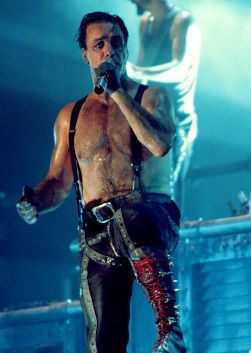
Till Lindemann is one of rock music’s most recognizable voices — the gravelly, German-accented frontman behind Rammstein, whose pyrotechnic concerts and deliberately provocative videos have made the band one of the world’s bestselling rock acts. His net worth is most frequently estimated at $8 to $20 million, with the higher figures reflecting three decades of album royalties, relentless touring, and an expanding solo career. Celebrity Net Worth, widely considered a conservative but consistent benchmark, puts the figure at $8 million.
At a Glance
- Full name: Till Richard Lindemann
- Born: January 4, 1963, Leipzig, GDR (now Germany)
- Occupation: Singer, lyricist, poet, actor
- Best known for: Lead vocalist of Rammstein (1994–present)
- Estimated net worth: $8–$20 million (2025–2026)
Net Worth: What We Actually Know
Pinning down Lindemann’s exact fortune is genuinely difficult. Rammstein doesn’t publish individual earnings, and wildly varying figures circulate online — from a conservative $8 million to inflated claims north of $150 million that have no credible basis. The most grounded estimates land between $8 million and $20 million.
Rammstein’s 2019 stadium tour reportedly grossed over $100 million, and the band has sold an estimated 25 to 45 million records worldwide since 1995. As frontman and co-writer, Lindemann holds a meaningful share of those royalties. His solo output — the Lindemann project with Peter Tägtgren, his 2023 debut solo album Zunge, and a packed touring schedule through 2025 and 2026 — adds income streams that simply weren’t part of the picture when biographical articles about him first circulated years ago.
Early Life and Family
Lindemann was born on January 4, 1963, in Leipzig, then part of East Germany. His father, Werner Lindemann, was a well-regarded children’s poet; his mother, Brigitte Hildegard “Gitta” Lindemann, was a writer. He has a younger sister named Saskia.
At 11, his parents enrolled him at SC Empor Rostock — a sports school that trained athletes for the GDR’s national program. He lived in a sports boarding school for the final three years before graduation, from 1977 to 1980. His parents separated after 1975 and eventually divorced; Till lived for a period with his father, though Werner’s alcoholism made that arrangement strained.
The training regime was punishing, and Lindemann has said he never liked it — but he was genuinely competitive. At the 1978 European Youth Swimming Championships in Florence, he finished 11th in the 1500-meter freestyle and 7th in the 400-meter freestyle. He was selected for the GDR squad to compete at the 1980 Moscow Olympics, but an abdominal muscle injury during training ended his athletic career before he could compete.
The Road to Rammstein
Lindemann found his way into music in the mid-1980s. In 1986, he joined the punk rock band First Arsch as a drummer, and occasionally performed with Feeling B — a group that would later supply two of Rammstein’s founding members. Shows took place in abandoned factories and construction sites outside city limits, where the risk of a police appearance was part of the atmosphere.
His shift from drummer to lead vocalist came almost by accident. In 1993, guitarist Richard Kruspe — a friend from Schwerin — persuaded Lindemann to move to Berlin and try fronting his new project. Lindemann was reluctant and found the transition hard. The band entered the Berlin Metrobeat competition almost on impulse, with demos recorded in an apartment. They won.
Two members of Feeling B, rhythm guitarist Paul Landers and keyboardist Christian “Flake” Lorenz, joined the lineup. The group took the name Rammstein — a reference to the 1988 airshow disaster at Ramstein Air Base — and signed with Motor Music in 1994.
Rammstein: A Career in Full
Rammstein’s debut album Herzeleid arrived in 1995. Their sound — dense industrial riffs, Lindemann’s operatic baritone, and lyrics that walked a deliberate line between symbolism and shock — didn’t break through immediately. Early European tours met mixed reactions; one show in Poland ended with the band being pelted with bottles.
The wider breakthrough came through an unlikely route. Director David Lynch placed two Rammstein tracks in his 1997 film Lost Highway, giving the band exposure in the American market before most US audiences had heard of them. A 1998 US tour supporting Korn ended in an arrest for Lindemann and keyboardist Flake after an on-stage stunt was deemed indecent in Jacksonville, Florida — they were released on bail the following day.
The discography built steadily from there:
- Sehnsucht (1997) — their first significant international chart success, boosted by the “Du Hast” single
- Mutter (2001) — widely considered their creative peak; the title track’s video depicted a man conceived in a test tube who kills his mother
- Reise, Reise (2004) and Rosenrot (2005) — cemented the band as a stadium-filling act; by 2005, five albums had achieved platinum certification and the band received World Sales Awards for over ten million copies sold
- Liebe ist für alle da (2009) — temporarily seized in Germany over explicit content before the ruling was overturned
- Rammstein (2019) — their first self-titled album, released after a decade-long gap, debuted at number one across Europe and anchored a stadium tour that grossed over $100 million
Lindemann took voice lessons throughout the band’s early years, including extended sessions with an opera singer who had him sing while holding a chair above his head or performing push-ups mid-phrase. The training shows — his range and control are unusual for the genre.
Rammstein concerts became known for elaborate pyrotechnic productions few rock bands have attempted to match. For the “Ich tu dir weh” video shoot, Lindemann had a small incision made in his cheek to thread a wire and bulb that would produce light from his mouth. For live performances of “Mein Teil” — a song written in response to the Armin Meiwes cannibalism case — he took the stage in a leather apron with a butcher’s knife while Flake sat in an oversized cauldron. The band’s imagery drew censorship attempts in multiple countries, including a 2016 request by a Russian parliamentarian to ban Rammstein concerts nationwide.
Solo Work and the Lindemann Project
Lindemann’s first outside venture began with a friendship. Around 2000, he met Swedish musician Peter Tägtgren (of Hypocrisy and Pain), and the two spent years trying to carve out time in their respective schedules to record together. On his 52nd birthday in January 2015, Lindemann announced the side project Lindemann with Tägtgren as co-writer and producer. Their debut album Skills in Pills — recorded in English — was released in June 2015 and debuted at number one in Germany. A second collaboration, the EP F&M, followed in November 2019.
In November 2023, Lindemann released Zunge (German for “tongue”) — his debut solo studio album, this time without Tägtgren. It was preceded by a run of singles: “Schweiss,” “Nass,” “Lecker,” and “Sport frei.” The album was reissued in 2025 as Zunge 2025, expanded with nine additional tracks including three previously unreleased songs.
December 2024 brought the single “Meine Welt,” which anchored a 26-date European arena tour of the same name running from October through December 2025. An earlier collaboration with violinist David Garrett produced the single “Alle Tage ist kein Sonntag” in December 2020 — a cover of a German Schlager song originally written in the 1920s.
Film and Acting
Lindemann has taken several screen roles alongside his music career. In 1999, he and Rammstein drummer Christoph Schneider appeared in the Swedish drama Paul X. In 2002, the full Rammstein lineup appeared as themselves in the Vin Diesel action film xXx. Lindemann also appeared in the German family film Penguin Amundsen (2003) and in Vincent (2004), playing an animal welfare advocate.
Poetry and Visual Art
Lindemann has written poetry since the early 1990s. In 2002, with the support of director and producer Gert Hof, he published Messer (“Knife”), a collection of 54 poems. A second collection, In stillen Nächten (“In Quiet Nights”), followed in 2013. That same year, he presented two sculptures alongside original drafts of the In stillen Nächten poems at the Holger John Gallery in Dresden. In October 2017, he co-authored Yukon: My Hated Friend with American musician Joe Kelly — an account of a canoe trip down the Yukon River.
Personal Life
Lindemann married at 22 and divorced not long after. His first daughter, Nele, was born in 1985; he raised her largely on his own for her first seven years. His second daughter, Marie Louise, was born in 1993 in a relationship with teacher Anna Közelin. By his own account, those years were turbulent — heavy drinking, infidelity, and at least one physical altercation that became public. He has been private about relationships ever since. In 2007, Nele gave birth to his grandson, Fritz Fidel. From 2011 to 2015, Lindemann was in a relationship with German actress Sofia Thomalla.
He cites Deep Purple, Alice Cooper, and Black Sabbath as foundational influences, and has spoken warmly about Marilyn Manson and Chris Isaak. He identifies as an atheist and has said the same of his bandmates.
The 2023 Misconduct Allegations
In May 2023, a fan publicly accused Lindemann of drugging her at a pre-concert gathering in Vilnius, Lithuania. The claim spread rapidly and prompted broader allegations in the press about practices at Rammstein’s pre-show events. Lindemann denied everything through his lawyers, who described the accusations as “without exception untrue.”
German prosecutors opened an investigation. In August 2023, they closed it — stating the inquiry “did not provide any evidence” to support the accusations and that there was “little opportunity to substantiate the allegations sufficiently,” with most claims having come from third parties or through press reports rather than from direct complainants. The original accuser had also clarified that Lindemann had not touched her and had respected her refusal.
Where He Stands Now
Rammstein’s members have been focused on individual projects since the 2024 touring cycle ended, with no official announcement of new band activity. Rumors of a permanent split have circulated for years — guitarist Richard Kruspe raised the possibility that the 2019 album could be their last — but no formal statement has been made.
Lindemann himself has been one of rock’s more active touring artists heading into his mid-sixties. His 26-date “Meine Welt” European arena run wrapped late 2025. For 2026, he has announced Till Fest — two open-air concerts on July 3 and 4 at the Völkerschlachtdenkmal in Leipzig — along with a world tour spanning Europe, North America, South America, and Asia.
Frequently Asked Questions
What is Till Lindemann’s net worth?
Most estimates range from $8 million (Celebrity Net Worth) to around $20 million, depending on methodology. The wide spread reflects the difficulty of separating individual earnings from shared band revenues. His income comes primarily from Rammstein royalties, solo album sales, touring, and merchandise.
Is Rammstein still active?
As of mid-2026, no official breakup has been announced. Members have been individually active since 2024, and Lindemann’s touring schedule continues under his own name.
What was Till Lindemann’s first solo album?
Zunge, released November 3, 2023. It was reissued in expanded form as Zunge 2025, adding nine tracks including three previously unreleased recordings.
How many children does Till Lindemann have?
Two daughters — Nele (born 1985) and Marie Louise (born 1993) — and one grandson, Fritz Fidel, born in 2007.
Where does most of Till Lindemann’s money come from?
The bulk comes from Rammstein: three decades of album royalties on a catalog that has sold tens of millions of copies, plus income from some of rock’s highest-grossing stadium tours. His solo projects — the Lindemann collaboration with Tägtgren, Zunge, and ongoing touring — have added to that base significantly since 2015.