
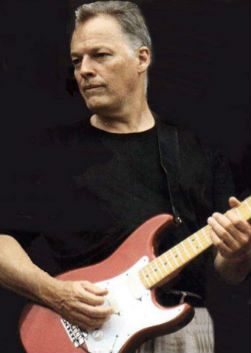
David Gilmour’s Net Worth at a Glance
David Gilmour’s net worth is estimated at approximately $180 million as of 2025. That number reflects five decades of earnings from one of rock’s most commercially durable catalogs, a solo career that has consistently topped charts well into his seventies, and a landmark charity guitar auction that set a world record. No verified public accounting of his finances exists — estimates like this one are built from known transactions, industry benchmarks, and catalog valuation — but the broad picture is solid enough to work with.
Where the Money Comes From
- Pink Floyd catalog. The Dark Side of the Moon alone has sold over 45 million copies worldwide. The Wall, Wish You Were Here, and Animals continue generating substantial royalty and licensing income. In October 2024, the remaining members of Pink Floyd sold their recorded music catalog — along with the band’s name, likeness rights, and album artwork — to Sony Music for approximately $400 million. The deal excluded songwriting rights, which Gilmour and the other writers retain separately. As one of the band’s principal members, Gilmour received a significant portion of that sum.
- Songwriting royalties. Gilmour co-wrote many of the band’s most-played tracks and continues to earn from streaming, sync licensing, and public performance. His royalty stake in songs like “Comfortably Numb,” “Wish You Were Here,” and “Shine On You Crazy Diamond” represents an ongoing income stream that shows no signs of fading.
- Solo recordings and live performances. His five solo albums have all charted well; On an Island (2006), Rattle That Lock (2015), and Luck and Strange (2024) all debuted at number one in the UK. His tours have been modestly scaled but heavily attended.
- The 2019 guitar auction. In June 2019, Gilmour auctioned 123 guitars from his personal collection at Christie’s New York, raising more than $21 million in total — all of which went directly to ClientEarth, the environmental law charity. His 1969 Fender Stratocaster known as the “Black Strat” — the instrument heard throughout The Dark Side of the Moon and The Wall — sold for $3,975,000, setting a world record for a guitar sold at auction at the time. The sale also set the record for the most valuable guitar collection sold at a charity auction.
- Real estate. Gilmour owns a farm near Wisborough Green in West Sussex and a home in the coastal town of Hove on the English Channel. For many years he also owned the Astoria, a converted houseboat on the Thames that doubled as a recording studio.
The Sunday Times Rich List pegged his fortune at £100 million back in 2016 — before the Sony catalog deal, before the 2019 guitar auction, and before several more years of catalog income. The current $180 million estimate is consistent with how those events would have moved the figure.
Early Life: Cambridge and the Guitar
David Jon Gilmour was born on March 6, 1946, in Cambridge. His father lectured in zoology at Cambridge University; his mother worked as a film editor for the RAF. The household was intellectually serious and broadly supportive of the arts — though Gilmour found music on his own terms.
He bought his first record at eight: Bill Haley’s “Rock Around the Clock.” Elvis Presley’s “Heartbreak Hotel” followed, then the Everly Brothers’ “Bye Bye Love,” and by the time he was around twelve he was teaching himself guitar from instruction books. Nobody told him to. He just kept going.
From age eleven, Gilmour attended the Perse School in Cambridge. Through friends there, he crossed paths with students from the nearby County High School — among them Syd Barrett and Roger Waters. The three became close. No one in that group had any idea what they were looking at.
By 1962, Gilmour was enrolled at Cambridge Technical College but left before finishing. He was spending most of his time with a guitar, often playing with Barrett, the two of them pushing at the edges of what the instrument could do. He joined a local group called Jokers Wild, recorded a single at Regent Sound Studio in London (pressed in an edition of fifty copies), and in 1965 set off on a European busking tour with Barrett and a handful of friends. They played Beatles songs in the street, got moved on by police regularly, and more or less starved. At one point Gilmour ended up hospitalised from malnutrition. The trip was a commercial disaster and a useful education in every other way.
He spent time in Paris afterward — visiting the Louvre when he could, driving cars for hire, working briefly as an assistant to the fashion designer Ossie Clark, who created stage costumes for Mick Jagger and the Rolling Stones. In 1967, he toured France again with former Jokers Wild bandmates Rick Wills and Willie Wilson, recording two songs for the Brigitte Bardot film Two Weeks in September. They came home without money for fuel; friends literally pushed their van off the ferry.
Joining Pink Floyd
In December 1967, Pink Floyd drummer Nick Mason called Gilmour and asked him to come play with the band. Syd Barrett — the group’s founder, singer, and primary creative force — had become unreliable. LSD and what appeared to be serious mental illness had made his behaviour unpredictable on stage and off. The plan was for Gilmour to supplement Barrett, not replace him. Barrett would keep writing; Gilmour would cover the performances Barrett could no longer reliably deliver.
That arrangement lasted about four months. Barrett would drift onstage, forget to play, or simply stand motionless staring at the audience. Roger Waters later recalled that despite their genuine affection for Syd, there were nights the band wanted to strangle him. By April 1968, Barrett was out. Gilmour — twenty-two years old, with no major-label experience — was now the lead guitarist and co-vocalist of one of Britain’s most-talked-about bands.
His first full album with the group, A Saucerful of Secrets (1968), still bore Barrett’s fingerprints. Over the next several years, Gilmour’s influence gradually pulled the band’s sound away from the whimsical and toward something more expansive and atmospheric.
Pink Floyd: The Classic Albums
Atom Heart Mother (1970) reached number one in the UK. The concert film Pink Floyd: Live at Pompeii (1971) — shot in a Roman amphitheater without an audience — captured the band in the middle of forming what would become their defining sound.
Then came The Dark Side of the Moon in 1973. Few albums in rock history have matched its commercial endurance. With sales upward of 45 million copies, it holds records for its sustained presence on the Billboard charts and remains one of the best-selling albums ever made. Gilmour’s playing throughout is patient and melodic — the solo on “Money” and the lead lines on “Time” are textbook examples of saying exactly what needs to be said and stopping.
Wish You Were Here (1975) followed, built around “Shine On You Crazy Diamond” — a piece in nine parts dedicated to Syd Barrett, who by then was living quietly outside Cambridge. Gilmour has named it his personal favourite of the band’s albums. Animals (1977) and The Wall (1979) came next, both shaped largely by Roger Waters, whose vision had grown into something one band could barely contain.
The Wall sessions strained relationships to the breaking point. Keyboardist Richard Wright was effectively dismissed during recording and kept on as a salaried musician for the tour. The dynamic between Waters and Gilmour — always different temperaments — hardened into open conflict. During The Final Cut sessions in 1982–83, the two reportedly scheduled their studio time specifically to avoid being in the room together.
Gilmour’s solo on “Comfortably Numb” — recorded during that period of tension — has appeared on more “greatest guitar solos of all time” lists than almost any other performance. It’s two sustained minutes of melodic playing that sounds less like technique and more like something you can’t quite name.
In 1985, Waters announced he was leaving the band, declaring Pink Floyd “a spent force.” Gilmour disagreed. He retained the band name, brought Wright back, and continued. A Momentary Lapse of Reason (1987) and The Division Bell (1994) followed — the latter reaching number one in the UK and going gold and platinum in the United States. The band was inducted into the Rock and Roll Hall of Fame in 1996.
Pink Floyd’s most celebrated reunion came in July 2005 at the Live 8 concert in London’s Hyde Park — the first time Waters had played with the band in twenty-four years. Gilmour donated his performance fees to charity. Sales of the band’s back catalog surged in the weeks that followed.
Solo Career
Gilmour had been recording under his own name since 1978, releasing his self-titled debut while still officially a member of Pink Floyd. About Face followed in 1984 — a more explicitly opinionated record that addressed, among other things, the murder of John Lennon.
His third solo album, On an Island, appeared on his sixtieth birthday in 2006. He recorded it aboard the Astoria, his converted houseboat moored on the Thames. It debuted at number one in the UK. That same year he released a reworked version of the Pink Floyd debut track “Arnold Layne,” dedicating it to Syd Barrett, who had died in July 2006. Richard Wright and David Bowie both contributed to the recording.
Rattle That Lock (2015), co-written with his wife Polly Samson, reached number one in the UK and number five on the Billboard 200. The accompanying tour included two concerts at the ancient amphitheatre in Pompeii in 2016 — forty-five years after Live at Pompeii was filmed there — this time in front of 2,600 fans. The resulting concert film was screened in 2,000 cinemas worldwide in September 2017.
In April 2022, Gilmour and Mason released “Hey Hey Rise Up” — the first piece of music recorded by Pink Floyd since 2014. The song featured Ukrainian singer Andriy Khlyvnyuk of the band BoomBox and was based on a 1914 Ukrainian patriotic march. Released in direct response to Russia’s invasion of Ukraine, it raised £500,000 for the Ukraine Humanitarian Relief Fund.
In September 2024, Gilmour released Luck and Strange — his fifth solo studio album and his first collection of original material in nine years. Produced with Charlie Andrew and featuring lyrics largely written by Polly Samson, the album debuted at number one on the UK Albums Chart. His daughter Romany joined him on every night of the subsequent twenty-one-date tour, singing “Between Two Points.” A live album, The Luck and Strange Concerts, and a concert film, Live at the Circus Maximus, Rome, were released in October 2024.
Philanthropy
Gilmour has donated meaningfully throughout his career, not symbolically. In 2003, he gave the full £3.6 million proceeds from the sale of his London home to Shelter, the UK housing charity, to fund affordable housing for homeless people. His 2019 Christie’s guitar auction — over $21 million for ClientEarth — remains one of the largest single philanthropic acts by a musician through the sale of personal property. The “Hey Hey Rise Up” release in 2022 raised £500,000 for Ukrainian humanitarian relief. He is associated with several other charitable organisations and has consistently directed public attention and personal resources toward causes he believes in.
Personal Life
Gilmour married for the first time in 1975. His first wife, Virginia Heisenbein — an American model, artist, and sculptor known as Ginger — had four children with him: Alice, Clare, Sara, and Matthew. The marriage ended in 1990.
In 1994, he married Polly Samson, a novelist and lyricist sixteen years his junior. Samson has written lyrics for many of his songs and is an accomplished author in her own right. She came to the marriage with a young son, Charlie, from a previous relationship with playwright Heathcote Williams. She and Gilmour have three children together: Joe, Gabriel (who played piano on the Rattle That Lock track “In Any Tongue”), and Romany (who joined him on tour in 2024).
He is a licensed pilot who spent years building a collection of vintage aircraft before selling most of it and keeping a single biplane. He is a long-standing Arsenal supporter, describes himself as an atheist, and holds left-leaning political views, consistent with his parents’ outlook. The family’s primary home is a farm near Wisborough Green in West Sussex; he also maintains a residence in Hove on the English Channel.
Awards and Recognition
- Grammy Award (1994) — Best Rock Instrumental Performance, “Marooned” (with Pink Floyd)
- Commander of the Order of the British Empire (CBE), awarded 2003
- Rock and Roll Hall of Fame inductee (1996, as a member of Pink Floyd)
- Q Award for Outstanding Contribution to Music (2008)
- Honorary Doctorate, Anglia Ruskin University (2009)
- Named among the greatest guitarists of all time by Rolling Stone and Classic Rock
- Named among the greatest rock vocalists by listeners of Planet Rock
Frequently Asked Questions
What is David Gilmour’s net worth in 2025?
His net worth is estimated at approximately $180 million. The figure reflects five decades of Pink Floyd royalties, a solo career that has repeatedly reached number one, his share of the band’s $400 million catalog sale to Sony Music in 2024, and his real estate holdings.
How did David Gilmour make his money?
The core of his wealth is Pink Floyd’s catalog — one of the best-selling in rock history, with over 250 million albums sold worldwide. He also earns from his solo recordings and live performances, and received a significant portion of the $400 million deal when the band sold its recorded music rights, name, and likeness to Sony in 2024. The songwriting royalties — not included in that deal — continue to generate income separately.
Did David Gilmour sell his guitar collection?
Yes. In June 2019, he auctioned 123 guitars at Christie’s New York, raising more than $21 million in total. Every dollar went to ClientEarth, the environmental law charity. The highest single lot was the “Black Strat” — a 1969 Fender Stratocaster used throughout The Dark Side of the Moon and The Wall — which sold for $3,975,000, a world record for a guitar at auction at that time.
Is David Gilmour still making music?
Yes. His fifth solo album, Luck and Strange, debuted at number one in the UK in September 2024. He followed it with a twenty-one-date tour and released a live album and concert film from the dates. At seventy-eight, he continues to record and perform.
Did Pink Floyd sell their music catalog?
Yes. In October 2024, Pink Floyd sold their recorded music catalog, name and likeness rights, and album artwork to Sony Music for approximately $400 million. The deal did not include songwriting rights, which the band’s writers — Gilmour, Roger Waters, Nick Mason, and the estate of Richard Wright — retain separately.