
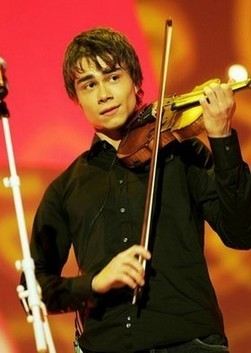
When Alexander Rybak walked offstage at Eurovision 2009 in Moscow, he had just scored 387 points — the highest total in the contest’s history under the old voting system, and 95 points more than anyone had ever achieved before. Every single participating country gave him at least some votes. That one night turned a 23-year-old Norwegian-Belarusian violinist into a household name across Europe, and it laid the foundation for a career that has built an estimated net worth of around $3 million as of 2026.
Alexander Rybak’s Net Worth in 2026
Rybak’s net worth is estimated at approximately $3 million, based on aggregated figures from celebrity wealth trackers and social media analytics platforms. The number reflects earnings from album sales, streaming royalties, concert tours, songwriting credits, television appearances, and a steady social media presence built over nearly two decades in the industry.
His Instagram account alone carries an estimated sponsorship value of $80,000–$110,000 per year, according to HypeAuditor’s analytics. He has never been the kind of artist who chases brand deals aggressively, but his continued visibility in European music — and a fresh creative run in 2025 and 2026 — keeps those numbers from declining.
Where His Money Comes From
Rybak’s income draws from several streams at once, which is largely why his career has remained financially viable long after the Eurovision spotlight faded for most winners.
- Album sales and streaming. His debut album Fairytales (2009) reached number one in Norway and Russia and charted in the top 20 across nine European countries. A catalog now spanning six studio albums — including Fairytales Too, released January 19, 2026 — continues generating streaming revenue.
- Concert touring. Rybak toured relentlessly after 2009, particularly in Eastern Europe and Russia, where his Eurovision win made him enormously popular. In the year following his victory, he reportedly had only four days off — including Christmas and his birthday.
- Songwriting royalties. He has written for other artists, including the Belarusian group Milki and Maltese Eurovision 2014 participant Franklin Halley (“Still Here”). Royalties from those works generate passive income without requiring him to be on stage.
- Television and live event fees. His 2015 runner-up finish on the Russian celebrity impersonation show One to One! brought substantial media fees. He also performed at a Red Square concert representing the Sochi Olympic Games alongside ice skater Alexei Yagudin.
- YouTube and social media. His YouTube channel has accumulated significant viewership across “Fairytale” performances, violin covers, and more recent content he began posting after launching on TikTok in early 2024.
Early Life: A Family Built Around Music
Rybak was born on May 13, 1986, in Minsk, Belarus. His parents were both professional musicians. His father Igor played violin in the Vitebsk Musical Ensemble and the Minsk Chamber Orchestra; his mother Natalia was a pianist who went on to work as a music journalist and editor for national television.
The family moved to Norway when Alexander was four, eventually settling in Nesodden, a municipality just south of Oslo. His grandmother, music teacher Maria Savitskaya, began teaching him folk songs when he was two. By age three he had sung his father an original composition during a walk — which apparently convinced Igor to start him on instruments properly.
He enrolled at the Barratt Due Institute of Music in Oslo at age 10, focusing on violin while also picking up piano and guitar as secondary instruments. He graduated in June 2012 with a Bachelor of Music in violin performance. He also attended a school for music, dance, and dramatic art, where he received his secondary education alongside the conservatory training.
At 17, he joined the orchestra for a Norwegian musical production starring Morten Harket — the vocalist of A-ha — and toured with the show across Europe, America, and China. In 2006, he entered the Kjempesjansen Young Talent Competition and won with his own original song, “Foolin’.”
Eurovision 2009: The Record That Still Stands
Rybak represented Norway at the Eurovision Song Contest 2009 in Moscow with “Fairytale” — a song he wrote after breaking up with his then-girlfriend Ingrid. He considered it almost too simple to compete with and genuinely did not expect to win.
He won by a margin that shocked the industry. His 387-point total shattered the previous record of 292, set by Finnish rock group Lordi in 2006, and he finished 169 points ahead of Iceland in second place. Receiving votes from every other participating country, he became the youngest solo male winner in Eurovision history at the time, and remains the only Belarusian-born artist to win the contest.
A month after Moscow, his debut album Fairytales landed in stores. Fans lined up outside record shops — the kind of physical retail rush the music industry rarely sees anymore. Within the year, he was performing sold-out concerts across Eastern Europe and Russia.
Building a Career After Eurovision
Not every Eurovision winner sustains momentum. Rybak mostly did. He released two more albums in 2010 — No Boundaries and Heaven of Europe — followed by Visa vid vindens ängar in 2011 and Christmas Tales in 2012. Over this stretch he shifted gradually from pop toward family-oriented and children’s music, regularly performing with youth orchestras across Scandinavia.
His television presence grew during this period, particularly in Russia. He appeared on programs including Minute of Glory and Ukraine’s Star Factory, and became a recognizable face across the post-Soviet entertainment landscape. That regional fame helped sustain concert income well into the mid-2010s.
In 2015, he competed on the Russian show One to One! — a celebrity impersonation format — and finished second. He has singled out his Enrique Iglesias performance as the most demanding of the series, specifically because it required him to suppress the open, easy warmth that defines his own stage presence and inhabit something more guarded instead.
A Second Eurovision Run in 2018
Rybak won Norway’s national selection — Melodi Grand Prix — in 2018 with “That’s How You Write a Song,” earning him a second shot at Eurovision. He won his semi-final in Lisbon with 266 points, making him the only artist to win two Eurovision semi-finals since that format was introduced in 2004. In the final, he placed 15th, with Israeli singer Netta taking the title.
Health Struggles and the Road Back
In 2024, Rybak disclosed publicly what had been going on behind the scenes for years. In a post announcing he was in rehabilitation, he wrote: “In recent years, the pills have made me weak, scared, angry. They affected not only the brain, but also the muscles, stomach and general condition of the body. This addiction ruined my relationships with people, but most importantly, it almost destroyed my will to live.”
The response from fans was immediate and warm. He channeled the experience directly into new music — releasing “Give Me Rain,” about recovering from a mental health crisis, and “My Whole World,” about emotional healing. He has described music not as a distraction from the process but as part of the therapy itself.
Alexander Rybak in 2025 and 2026
Rybak has been notably active over the past two years — not coasting on catalogue, but releasing new work and competing again.
In February 2025, he performed at the Malta Eurovision Song Contest final. In January 2026, he entered Norway’s Melodi Grand Prix with a new original, “Rise,” finishing as runner-up behind eventual winner Jonas Lovv. His sixth studio album, Fairytales Too — a deliberate callback to his breakthrough record — came out on January 19, 2026, and includes a track called “Benzo” that addresses his dependency and recovery directly.
In May 2026, he performed as part of the interval act at the Eurovision Song Contest final, joining a lineup of former Eurovision participants for a medley staged to mark the contest’s 70th anniversary.
Plagiarism Accusations
Rybak has faced plagiarism claims at various points in his career. Critics have noted similarities between “Fairytale” and the Turkish song “Bit Pazarı” by Hüseyin Yalın, and between his song “Abandoned” and the “Crane Song” by Soviet composer Kirill Molchanov. His Russian-language track “I Don’t Believe in Miracles” drew comparisons to Aerosmith’s “I Don’t Want to Miss a Thing,” earning him the Silver Galosh — a Russian entertainment industry anti-award — in 2010.
None of the accusations produced legal action or a formal finding of copyright infringement by any court or rights body.
Personal Life
Rybak has kept his private life largely out of the press. His first serious relationship was with violinist Ingrid Berg Mehus; they broke up in 2004, and it was that breakup that gave him “Fairytale.” He tried briefly to reconcile after the Eurovision win but ended things permanently shortly after.
He was later reported to have dated Lena Meyer-Landrut, the German singer who won Eurovision 2010. The relationship did not lead to marriage despite some public speculation.
In 2024, Rybak announced plans to study film composition at Columbia College Chicago — a direction that fits naturally with the compositional work he has always done alongside his performing career.
Career Timeline
- 1986 — Born May 13 in Minsk, Belarus.
- 1990 — Family relocates to Norway; settles in Nesodden, near Oslo.
- 1996 — Begins studying at Barratt Due Institute of Music, Oslo, age 10.
- 2001 — Wins award at the Sparre Olsen Young Musicians Competition.
- 2003 — Awarded a scholarship at Meadowmount School of Music, New York.
- 2004 — Receives the Anders Jares Prize for Culture.
- 2006 — Wins the Kjempesjansen Young Talent Competition with “Foolin’.”
- 2007 — Wins the Hedda Oslo Nye Teater Award for his role in Fiddler on the Roof.
- 2009 — Wins Eurovision in Moscow with “Fairytale” (387 points, all-time record); releases debut album Fairytales.
- 2010 — Releases No Boundaries and Heaven of Europe; wins Norway’s Spellemann Award (the Norwegian Grammy equivalent).
- 2012 — Graduates from Barratt Due Institute of Music with a Bachelor of Music in violin.
- 2015 — Finishes second on Russian TV show One to One!
- 2018 — Represents Norway at Eurovision in Lisbon; finishes 15th.
- 2024 — Publicly discloses years of addiction to antidepressants and sleeping pills; enters rehabilitation.
- 2025 — Performs at the Malta Eurovision Song Contest final.
- 2026 — Releases Fairytales Too; finishes runner-up at Melodi Grand Prix 2026 with “Rise”; performs at Eurovision 70th anniversary interval act.
Frequently Asked Questions
What is Alexander Rybak’s net worth?
Alexander Rybak’s net worth is estimated at approximately $3 million as of 2026, built through album sales, concert touring, songwriting royalties, television appearances, and social media earnings over more than 15 years in the industry.
How does Alexander Rybak earn money?
His main income sources are music — albums, streaming, and live performances — alongside songwriting royalties from songs he has written for other artists, TV appearance fees, and social media. His Instagram presence alone carries an estimated annual value of $80,000–$110,000.
What is Alexander Rybak’s most famous song?
“Fairytale,” which won Eurovision 2009 with 387 points — the highest score ever recorded under the contest’s old voting system. It reached the top of the charts in Norway and Russia and charted across nine European countries.
Is Alexander Rybak still making music?
Yes. He released his sixth studio album, Fairytales Too, in January 2026, competed at Norway’s Melodi Grand Prix in 2026, and performed at the Eurovision 70th anniversary celebration in May 2026.
Where is Alexander Rybak from?
He was born in Minsk, Belarus, and moved to Norway at age four. He has lived in Norway for essentially his entire life and holds Norwegian citizenship.