
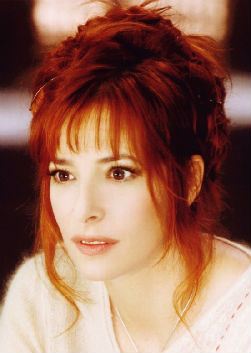
Mylène Farmer is routinely described as France’s wealthiest and highest-paid female singer, and the numbers behind that reputation are genuinely staggering: more than 30 million records sold in France alone, six diamond-certified albums, and a 2023–2024 stadium run that broke national attendance records. So what is she actually worth, and how did a girl born in suburban Montreal turn a deliberately mysterious persona into one of the most durable fortunes in European pop? Here’s a clear-eyed look at the money, and the five-decade career that produced it.
Mylène Farmer’s net worth: what the estimates say
There is no official figure for Mylène Farmer’s wealth — she is famously private and does not publish her finances, so every number you see is an outside estimate. With that caveat front and center, the credible ranges land like this:
- Around $50 million (roughly €45 million) is the figure most commonly cited by celebrity-finance trackers, including Celebrity Net Worth and French outlet Lama Fortune, whose early-2025 analysis put her fortune near €45 million.
- Higher figures circulate too — some sites quote €80 million or more, and tabloid-style “highest-paid singer in the world” headlines occasionally appear. Treat those with caution: several originate from satirical or auto-generated sources and shouldn’t be taken as reporting.
The honest summary: somewhere in the region of €45–50 million is the most defensible estimate, and she is consistently ranked among the richest French recording artists. Where the wealth comes from is much less ambiguous than the exact total.
How she built the fortune
Farmer’s money rests on three pillars that reinforce each other. First, a deep catalogue — more than three decades of consistently chart-topping albums that keep generating royalties and streaming income. Second, the live shows: her concerts are elaborate, high-grossing productions staged in the largest venues in France, and they sell out in minutes. Third, tight control of her image and a loyal fanbase that drives strong merchandise and reissue sales. She also writes or co-writes her material and has long shared production and creative ownership with collaborator Laurent Boutonnat, which keeps more of the value in-house.
Who is Mylène Farmer?
Born Mylène Jeanne Gautier on 12 September 1961, Farmer is a French singer, songwriter, occasional actress and producer who has dominated the French-language pop charts since the mid-1980s. She holds the record for the most number-one singles in French chart history and has earned the nickname the “French Madonna” — though her gothic, literary, often deliberately provocative style is very much her own. Notably, she has built that career while granting almost no interviews and revealing little about her private life, a scarcity that only deepened the public fascination.
Childhood in Quebec and a difficult move to France
For a quintessentially French star, Farmer’s beginnings were Canadian. She was born in Pierrefonds, a suburb of Montreal, where her father Max Gautier had relocated the family from France after taking a contract tied to the Manicouagan hydroelectric dam project. Her mother, Marguerite, worked as a secretary before becoming a full-time parent to the couple’s four children — Brigitte, Jean-Loup, Mylène and the youngest, Michel.
Mylène spent her first years in Quebec, attending a Catholic school run by nuns and collecting the kind of vivid memories she’d later recall fondly — deep snowdrifts and maple syrup you could dip your fingers into, to her mother’s irritation. When her father’s contract ended, the family returned to France and settled in the Paris suburbs near Chaville and Ville-d’Avray. The transition was hard. She had to work with a speech therapist to lose her Quebec accent, and classmates were unwelcoming, so she gravitated toward the boys who, like her, preferred climbing trees to fitting in.
Her grandmother Jeannette, who had trained at the Marseille Conservatory, became a formative influence — passing on a love of music, literature and painting, and encouraging the young Mylène to enter (and win) singing competitions. Summers spent on a second grandmother’s farm in Brittany gave her a lasting passion for horses, an image that would resurface again and again in her music videos.
From odd jobs to a stage name: the birth of “Mylène Farmer”
At 17, Farmer abruptly traded an earlier dream of becoming a riding instructor for acting. She left school before finishing and moved to Paris to study at the Cours Florent drama school, funding herself through a string of jobs — selling shoes, assisting a dentist, modeling, and appearing in TV commercials for brands like IKEA and Fiskars.
The pivotal meeting came in 1984, when she answered an advert and connected with composer-director Laurent Boutonnat. Working with songwriter Jérôme Dahan, Boutonnat had a provocative track about teenage rebellion — “Maman a tort” — and needed a singer who could embody it. Farmer fit perfectly. Before its release she reinvented herself completely, dyeing her hair red and swapping the surname Gautier for “Farmer,” a tribute to the troubled 1930s Hollywood actress Frances Farmer, whose rebellious reputation matched the persona Boutonnat envisioned.
Musical career: scandal, records and reinvention
“Maman a tort” became a hit in 1984 and launched one of the most successful partnerships in French pop. Farmer’s father, who had died two years earlier, never saw it. Her 1986 debut album Cendres de Lune followed, along with the 11-minute video for “Libertine” — a lavishly cinematic, sexually explicit short film that set the template for her career: music as provocation, videos as event. The 1989 clip for “Pourvu qu’elles soient douces” extended that storyline and turned her into an international talking point.
The albums that followed cemented her dominance: Ainsi soit je… (1988), the live En Concert (1989) and L’Autre… (1991) all sold heavily, and by the end of the 1980s she was being named singer of the year. Her commercial reach is hard to overstate — across her career she has sold more than 30 million records in France, scored six diamond albums, and accumulated the most number-one singles of any artist in the French charts.
The American detour and a return home
In 1994 Farmer chased a long-held film ambition. Boutonnat directed her in Giorgino, a dark period drama in which she played the lead opposite American musician Jeff Dahlgren. It flopped badly. Bruised by the failure, she relocated to the United States and recorded Anamorphosée (1995) in California, introducing a brighter, rock-tinged sound that many fans consider a creative high point — even as Farmer later admitted she felt she’d lost something of herself in America.
Back in France, tragedy struck in 1996 when her elder brother Jean-Loup was killed in a car accident; she dedicated later work to his memory. The hits kept coming regardless: Innamoramento (1999) launched a major world tour, the Mylenium Tour, which closed in Moscow in 2000, and subsequent albums — Les Mots (2001), Avant que l’ombre… (2005), Point de suture (2008), Bleu Noir (2010) and Monkey Me (2012) — kept her at the top.
High-profile duets and side projects
Farmer’s collaborations read like a list of her range. She recorded “Les Mots” with British soul singer Seal in 2001, the haunting “Slipping Away” with Moby in 2006, and “Stolen Car” with Sting in 2015. She voiced Princess Selenia in Luc Besson’s animated Arthur trilogy (2006–2010), and in 2007 she stepped behind the scenes as producer for the teenage singer Alizée, whose breakout success she helped engineer.
Mylène Farmer now: stadiums, records and a darker turn
Far from slowing down, Farmer’s recent decade has arguably been her most commercially powerful. After Interstellaires (2015), she released Désobéissance in September 2018 — a number-one album certified double platinum — and supported it with a spectacular nine-night residency at Paris La Défense Arena in June 2019, the largest indoor venue in Europe. Those shows, inspired visually by Blade Runner, drew roughly 243,000 spectators and produced the chart-topping Live 2019 album.
In November 2022 she released her twelfth studio album, L’Emprise, a darker concept record about psychological manipulation and breaking free of it. Its singles included “À tout jamais,” co-written with Woodkid, and “Rayon vert,” a duet with AaRON. The album set up the most ambitious live project of her career.
The Nevermore 2023/2024 tour was her first to play entirely in stadiums. It opened on 3 June 2023 at the Stade Pierre-Mauroy in Lille and closed on 1 October 2024 at the Stade de France in Paris — a run of 14 concerts that is regularly cited as the largest stadium tour in French music history. For an artist who almost never tours and rarely appears in public, the scale of demand says everything about her standing.
She has also kept a hand in acting: in 2018 she appeared in Pascal Laugier’s psychological horror film Incident in a Ghost Land (also released as Ghostland), playing a mother defending her daughters.
Personal life
True to form, Farmer has guarded her private life carefully. For years the press assumed she and Boutonnat were a couple as well as creative partners, though neither confirmed it. She was romantically linked to Giorgino co-star Jeff Dahlgren in the mid-1990s. Her longest known relationship was with producer Benoît Di Sabatino, whom she met around 2002; French media reported the couple separated in early 2022 after roughly two decades together. She has consistently said she did not want children.
Frequently asked questions
What is Mylène Farmer’s net worth?
Estimates are unofficial, but the most commonly cited figure is around $50 million (roughly €45 million). Higher numbers circulate, but several come from unreliable sources, so the €45–50 million range is the safest estimate.
Is Mylène Farmer French or Canadian?
Both, in a sense. She was born in Pierrefonds, Quebec, Canada, to French parents and holds that heritage, but the family returned to France in her childhood and she built her entire career there as a French artist.
Why is she called the “French Madonna”?
The nickname reflects her commercial dominance, her theatrical and often provocative image, and her career-long reinventions — though her gothic, literary style is distinctly her own.
Does Mylène Farmer still tour?
Rarely, which is part of why her shows sell out instantly. Her most recent tour, Nevermore, ran through stadiums across France and ended at the Stade de France in October 2024 — widely described as the biggest stadium tour in the country’s history.
How many records has she sold?
More than 30 million in France, with six diamond albums and the record for the most number-one singles in French chart history.