
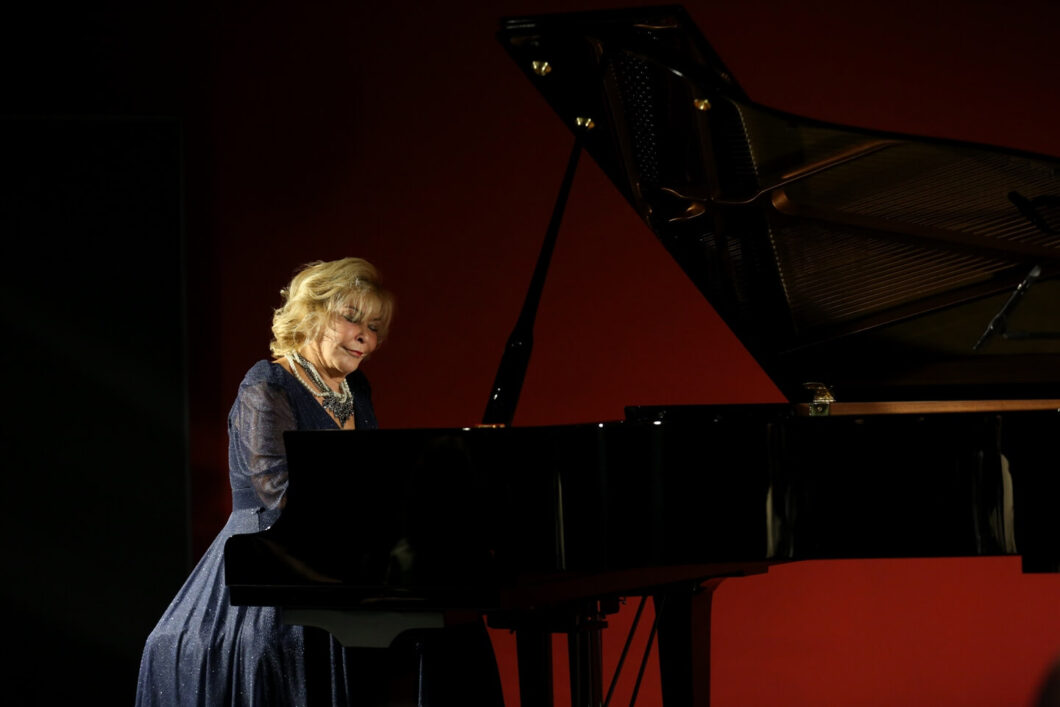
Few musicians embody Turkish classical music on the world stage the way Gülsin Onay does. Born in Istanbul in 1954, she sat down at the piano at the age of three, gave her first broadcast concert on TRT Radio at six, and won a government scholarship at ten that took her from Ankara to the Paris Conservatoire, where she graduated at sixteen with the Premier Prix de Piano. Her teachers along the way included Mithat Fenmen, the composer Ahmed Adnan Saygun, and the legendary Nadia Boulanger.
In the decades since, Onay has performed in more than 80 countries across every continent, recording and championing repertoire that ranges from the standard canon to the music of her own country. She remains the definitive interpreter of Ahmed Adnan Saygun — the leading Turkish composer of the 20th century, whose Second Piano Concerto was dedicated to and premiered by her. Since 2003 she has served as a UNICEF Goodwill Ambassador, and since its founding in 2004 she has been Artistic Advisor of the International Gümüşlük Classical Music Festival and Academy.
These days, when she isn’t touring or giving masterclasses, Onay sits on the juries of major international piano competitions. We caught up with her after one of them — the Eurasian Stars International Piano Competition in Astana, Kazakhstan — to talk about what she heard there, the contemporary repertoire on the programme, and the advice she gives young pianists chasing a career rather than a trophy.
What is Eurasian Stars, and how does it lead to Dubai?
Eurasian Stars is one of the qualifying rounds of the “14 Ways to Dubai” initiative, a network of competitions staged across 14 countries — among them the USA, France, Italy, Belgium, Austria, Kazakhstan, Poland, the UK, Armenia, China, South Korea, Japan, Israel and Spain. Pianists under the age of 35 compete locally, and the top five from each round earn an invitation to the Classic Piano International Competition in Dubai, which carries a total prize fund of €250,000.
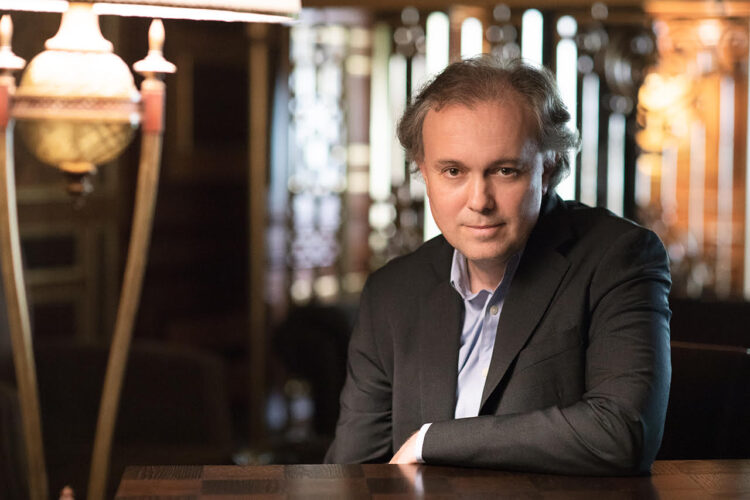
The Astana jury that sat alongside Onay included Nikita Mndoyants, Sara Assabayeva and Gulzhamilya Kadyrbekova. The competition’s programme is unusual in one respect: it requires performers to play the music of Alexey Shor, the American-Maltese composer who serves as Composer-in-Residence for Classic Piano. Shor came to music late — he worked as a mathematician before turning to composition in his forties — and his accessible, melodic style has become a signature of the whole competition circuit.
“It was a wonderful experience”: judging the talent in Astana
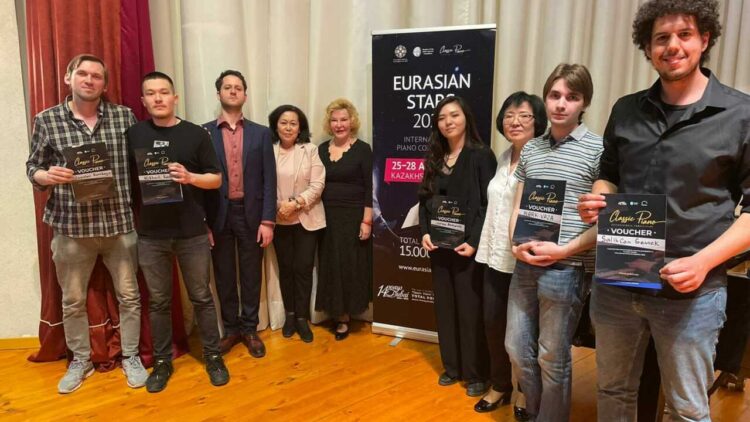
How was your experience of Eurasian Stars, and what did you think of the participants?
“It was a wonderful experience. It’s a really high-level competition, and it’s so important now more than ever before I feel, that such events are organized. Music is so important for the world these days, there is a great need for something to soothe our souls and music is so important for this.
Young people need to be encouraged to develop and share their own vision for the future, and I was so happy to see so many young, very talented pianists do just that in Astana, Kazakhstan, and having an audience to hear them. There were many really great pianists present, and I’m sure that very soon they are going to become great artists in their own right.”
What a juror actually listens for
As a jury member — here and in the many other contests you sit on — is there anything you are particularly looking out for when evaluating performances?
“There are some obvious elements which are expected of course – technique, skill, control of the instrument – all these must be there, and must be of a very high standard, but these alone are not enough.
Much more importantly I look out for the language of each musician, for their voice. It is not enough to just play, but they need to create meaning, to say something with the piece. Each note that they play has to have a meaning, it cannot just be playing mechanically, that’s not enough.”
Alexey Shor’s music: a “bridge from classical to contemporary”
This programme was a varied one, with contemporary repertoire alongside the standards. What did you make of the choice of pieces?
“I thought it was a very good programme, and I think it’s also a very good idea to have contemporary pieces included, both for the composers, who need to get their works out to different people with different voices and different interpretations, and also for the competition’s participants, the pianists, who get to show their creativity with a relatively new piece like the one by Alexey Shor and Mikhail Pletnev that was included here, because they’ve never heard it before so it’s all themselves and that’s very important, it makes a big difference.
And this work by Alexey Shor was a great choice I think, it is like a bridge from the classical to the contemporary. It has very very rich colours and is very beautiful, I really like it very much.”
The piece Onay refers to is Shor’s Suite for Piano and Orchestra No. 2, From My Bookshelf, which the composer originally wrote in 2019 and later reworked in collaboration with the pianist and conductor Mikhail Pletnev. Asking competitors to interpret a work they have never heard performed before strips away the temptation to imitate a famous recording — exactly the test of individual voice Onay describes above.
The “14 Ways to Dubai” format: a contest that leads to another contest
Eurasian Stars is a competition in its own right, but it also feeds the “14 Ways to Dubai” initiative — the five top-ranked pianists win a place at the invite-only Classic Piano competition in Dubai. What do you think of that format?
“Yes, I must say that it is the first time that I have been involved in a competition format of this form. I have been in many competitions as a jury member but this is very original, and I think it’s an incredibly motivating and exciting approach.
The chance to gain entry into an invite-only event is a great incentive for the participants, and at Classic Piano itself, there will be the crème de la crème as they say, a true contest of champions. So it’s all very exciting, and I think it’s going to result in a very unique and extremely high-level competition in Dubai. I’m very happy that I got to be a part of it all!”
Do competitions help young musicians — or harm them?
What is your view of the role competitions play in the music world more broadly?
“I think competitions can be extremely helpful, because they can encourage young pianists to grow their repertoire, and they can give them a purpose, a goal towards which to work so that they can show their very best.
Very often young people don’t have a concert schedule, they don’t have the opportunity to play in front of an audience, so to get such opportunities through competitions is a big help for them, especially when it comes to motivation.
However, as Béla Bartók famously said, competitions should be for horses, not musicians, and it’s important that we also keep in mind that too much competition can be a problem as well.
There are some young people who end up going from competition to competition, finishing one and heading straight into another, and well… let’s just say that it’s not good if it becomes an addiction. It’s very good to focus for a while, to prepare for a competition, but then after that, you have to find yourself, focus on your artistic pursuits and your concert schedule.”
Advice for young pianists — before and after they win
What advice would you give pianists preparing for competitions? And to those who have already won one — is that the finish line, or the first step?
“First of all, I think it’s important to remember that whether it is a competition or a concert, or if you’re just playing along at home, the most important thing is to create magic at the moment that you are playing, to concentrate on the music and ensure that each musical phrase should be a new creation and a creation of magic.
So I always say that there is no point in getting nervous or too excited or whatever. This is natural of course, but you must always remember that at the core of everything – be it competition or concert or just practice – is the music. You have to serve the music and show yourself through it.
As for those who have won competitions, well, winning is also not everything I’m afraid, and what comes after is also extremely important. The piano repertoire is unbelievably huge, it’s an absolute treasure, so huge that you cannot play everything in one life, it is impossible.
And I think it is always important to know more and more about this incredible collection of works. So any winner of any competition should continue to concentrate on making his or her repertoire larger, learning more pieces, discovering new treasures and just continuing on the journey of a musician with the same energy as before.
This journey is by its nature an endless one, so they need to continue on this road and keep on moving forward.”
New tools, new pressures: the digital age for young performers
Today’s conveniences open many doors for young pianists. Do they also bring new challenges that didn’t exist before?
“Well, like with everything in life, I think there are positive and negative sides to this point. Having so many possibilities, such incredible possibilities to meet everyone through the Internet for instance, and to talk to other musicians so easily, these are really wonderful.
At the same time though, you have to be very selective these days, because otherwise you can end up losing lots of time and energy, and you also need to be careful not to end up losing your own voice among the noise of the world.
So the advantages are there and need to be used, but there needs to be attention so that you do not lose yourself or your identity but continue to develop your inner voice.”
Performer, teacher, juror: a favourite role?
You’ve worn so many hats — performer, teacher, juror. Do you have a favourite?
“They’re very different roles of course, but I truly feel that they each offer me so much and I really love them all. I love being with young people and teaching them, and it’s always so wonderful to see their happiness when they learn something new.
And then as a juror it’s so interesting and exciting to hear young people play, it touches me so much to see the amazing abilities of these artists and the effort they put into their work.
These are people who could be going out and playing football or whatever, but instead, they choose to focus and work so hard on music which is just fantastic to witness.
And then there is playing itself, which is without question always such a great experience to go through, it’s such a joy for me, and I always feel so immensely thankful every day that I can still play!”
Frequently asked questions
Who is Gülsin Onay?
Gülsin Onay (born 1954 in Istanbul) is one of Turkey’s most celebrated classical pianists. Trained in Ankara and at the Paris Conservatoire, she has performed in more than 80 countries, is the foremost interpreter of composer Ahmed Adnan Saygun, and has been a UNICEF Goodwill Ambassador since 2003.
What is the Eurasian Stars competition?
Eurasian Stars is an international piano competition held in Astana, Kazakhstan. It is one of the qualifying rounds of the “14 Ways to Dubai” initiative, with its top five pianists advancing to the Classic Piano International Competition in Dubai.
Who is Alexey Shor?
Alexey Shor is an American-Maltese composer and a former mathematician who took up composition in his forties. He is Composer-in-Residence for the Classic Piano competition, and his works — including the suite From My Bookshelf — are required repertoire for its qualifying rounds.
What did Onay say about Shor’s music?
She described it as “a bridge from the classical to the contemporary,” praising its “very very rich colours,” and welcomed the chance for competitors to interpret a work they had never heard performed before.
Gülsin Onay continues a full schedule of concerts, masterclasses and competition juries. For her upcoming engagements, visit her official website here.