
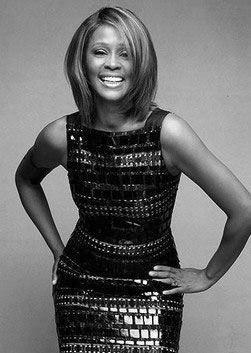
Here is the figure that surprises most people: when Whitney Houston died on February 11, 2012, she was not rich. One of the best-selling recording artists of all time — a woman who earned an estimated $250 million over a 25-year career — died with an estate that was, on paper, worth less than nothing. She owed more than she owned.
That gap between what she made and what was left is the real Whitney Houston money story, and it’s more revealing than any single dollar figure. Below is what’s actually known about her earnings, her debts, and the estate that has clawed its way back to value since her death — along with the life that produced both the fortune and its collapse.
What was Whitney Houston’s net worth when she died?
At the time of her death in 2012, Whitney Houston’s net worth was effectively negative. Despite generating an estimated $250 million across music, film, and endorsements during her career, she died deep in debt, her assets outweighed by what she owed. Celebrity Net Worth and multiple outlets reporting after her death described an estate that was insolvent at the moment she passed.
The money didn’t vanish to a single cause. It went to a combination of years of addiction, lavish spending, a long stretch of reduced earning power, and management of her finances that never matched the scale of her income at its peak. Reports after her divorce indicated her longtime mentor, Arista founder Clive Davis, had loaned her more than a million dollars to help her settle debts and get treatment — a sign of how tight things had become for an artist who, a decade earlier, had been one of the highest-paid performers on the planet.
How the estate rebounded after 2012
Death changed the math quickly. As often happens when a major artist dies, sales of Houston’s catalog surged, and the income that followed wiped out her debts and restored real value to her name. In the months after her death, her estate reportedly earned tens of millions of dollars from renewed music sales alone.
The Whitney E. Houston Estate, with her daughter as the sole heir and her sister-in-law Pat Houston as executor, has since signed licensing and commercial deals spanning a hologram tour, branded merchandise, and the 2022 biopic I Wanna Dance with Somebody. The estate that was underwater in 2012 has been reported in the years since at valuations in the tens of millions and climbing — a posthumous recovery that her own daughter, Bobbi Kristina, did not live to inherit.
Where the fortune came from: a career in numbers
To understand the debt, you have to understand the scale of what she earned first. Whitney Houston is one of the best-selling music artists in history, with more than 200 million records sold worldwide. Her run of commercial dominance in the late 1980s and early 1990s is the kind few artists ever touch.
- The debut, 1985. Her self-titled first album, Whitney Houston, became one of the best-selling debut albums ever recorded and produced a string of number-one singles.
- The follow-up, 1987. Whitney made her the first woman to debut at number one on the Billboard 200 album chart.
- The Super Bowl, 1991. Her performance of “The Star-Spangled Banner” at Super Bowl XXV — not, as is sometimes misreported, a football-league final — was so commanding it was released as a single and charted in the Top 40, the first time the national anthem ever did. She donated the proceeds to a Gulf War relief fund.
- The Bodyguard, 1992. Her film debut alongside Kevin Costner spun off a soundtrack that became one of the best-selling albums of all time, anchored by her cover of Dolly Parton’s “I Will Always Love You,” which held the number-one spot for 14 straight weeks.
Beyond the records, Houston built income streams that most singers never develop: starring film roles in Waiting to Exhale (1995) and The Preacher’s Wife (1996), a producer’s credit on the 1997 television Cinderella and other projects, and a final film, Sparkle, released months after her death. At her commercial peak in the 1990s, she ranked among the most bankable entertainers in the world.
Early life: a voice that was almost inevitable
Whitney Elizabeth Houston was born on August 9, 1963, in Newark, New Jersey, the youngest of three children. She didn’t have to go looking for music — it was the family business. Her mother, gospel and soul singer Cissy Houston, was an established performer; her cousin was Dionne Warwick; and her godmother was Aretha Franklin. Houston grew up Baptist and started out, like so many great American vocalists, singing in the church choir.
That upbringing gave her two things money can’t buy: a technically formidable instrument trained in gospel, and a front-row education in how the music business actually works. As a teenager she sang backup, did session work, and appeared on stage with her mother before signing with Arista Records in 1983 — the deal that would launch everything.
The personal life behind the headlines
Houston’s career soared in near-perfect synchrony for a decade. Her private life was harder. She was the subject of relentless tabloid speculation about her relationships, including her close, lifelong friendship with Robyn Crawford, whom Crawford later wrote about candidly in her own memoir.
In 1992 Houston married singer Bobby Brown. The marriage, which lasted until their divorce was finalized in 2007, coincided with the years her substance-abuse problems became public — and the years her finances began to erode. Their only child, Bobbi Kristina Brown (often misnamed “Christina” in older write-ups), was born on March 4, 1993. In a tragedy that eerily mirrored her mother’s, Bobbi Kristina was found unresponsive in a bathtub in 2015 and died that July at age 22.
How Whitney Houston actually died
Houston died on February 11, 2012, in her room at the Beverly Hilton Hotel in Beverly Hills, California, on the eve of the Grammy Awards. She was 48.
The Los Angeles County coroner ruled the death an accidental drowning. As the coroner’s report detailed, atherosclerotic heart disease and cocaine use were contributing factors — she was found submerged in a bathtub, with no signs of trauma or foul play. The common shorthand that she died of “sudden cardiac arrest” isn’t what the official finding said; the underlying picture was a heart condition complicated by drug use that caused her to slip beneath the water.
Frequently asked questions
Did Whitney Houston really die broke?
Effectively, yes. At her death her estate’s liabilities exceeded its assets, despite roughly $250 million in lifetime career earnings. The surge in catalog sales after she died is what restored the estate to positive value.
Who inherited Whitney Houston’s estate?
Her will left her estate to her only child, Bobbi Kristina Brown. After Bobbi Kristina’s death in 2015, the estate passed to other family members, with Houston’s sister-in-law Pat Houston serving as executor.
How many records did Whitney Houston sell?
She is credited with more than 200 million records sold worldwide, placing her among the best-selling recording artists in history.
What is Whitney Houston’s estate worth today?
Estimates have varied widely as new licensing deals, the hologram tour, and the 2022 biopic added income. Reports since her death have placed the estate’s value in the tens of millions — a dramatic reversal from the negative balance it carried in 2012.
The lesson in Houston’s finances isn’t a cautionary cliché about fame. It’s narrower and sharper than that: extraordinary earning power and lasting wealth are not the same thing, and the distance between them can be measured in the quality of the years in between. Houston earned a fortune that few artists ever will. What happened to it is its own story — and it’s only become legible now that the catalog she left behind is, at last, paying its way.