
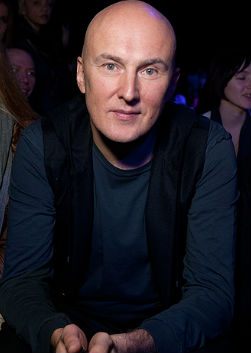
Biography of Igor Matvienko
Igor Igorevich Matvienko is a Russian pop composer, record producer, and hitmaker who shaped the sound of post-Soviet popular music. He founded the bands Lyube, Ivanushki International, Fabrika, and Korni, launched the careers of dozens of artists, and served as the music producer for the 2014 Sochi Olympics ceremonies. As of 2026, Matvienko’s production empire generates over 400 million rubles annually across six companies, placing his estimated net worth in the range of $5–8 million.
Honored as a People’s Artist of Russia — the country’s highest artistic title — Matvienko has written hundreds of songs, many of which have become genuine folk hits. His composition “Konya” (Horse) is widely mistaken for a traditional Russian folk song.
Childhood and Education
Matvienko was born on February 6, 1960, in Moscow. His father, a Ukrainian military officer, and his mother, a Russian economist at the State Planning Committee, did not initially steer him toward music. Like most Moscow boys in the 1960s, his childhood revolved around yard games with neighborhood friends.
Everything changed at age 10 when his parents bought a Zarya piano and enrolled him in music school. The daily practice felt tedious at first, but his mother’s persistence and a teacher who knew how to connect with a restless boy eventually clicked. He learned to play, began composing, and discovered that making music was more engaging than anything else.
After graduating from secondary school, he entered the Ippolitov-Ivanov Music School (known informally as Ippolitovka) and earned his diploma in choral conducting in 1980.
Early Career: From Keyboardist to Lyube
Matvienko’s professional music career started in 1981. He worked as an artistic director, keyboardist, and songwriter for vocal-instrumental ensembles including “Hello, Song!” and “Class,” performing at stadium-sized venues across the Soviet Union.
In 1987 he joined the Record studio as an editor and, together with singer Nikolai Rastorguev and poet Alexander Shaganov, founded the rock group Lyube. The band’s patriotic rock sound — a blend of folk melodies, military themes, and arena-energy — was unlike anything on Soviet radio. Matvienko wrote most of their early catalog: “Konya,” “Atas,” “Davay za…,” “Polustanochki,” and “Beryozy.” He has described “Konya” as the most important song he ever wrote — it has been covered by dozens of choirs and is widely assumed to be a traditional folk song, which Matvienko considers the highest compliment.
The Boy Band Era: Ivanushki International
In 1994, Matvienko set out to fuse Russian folk traditions with Western dance-pop — a gamble few thought would work. He assembled three young singers: Igor Sorin, Kirill Andreev, and Andrey Grigoriev-Apollonov, and named the group Ivanushki International.
The second single, “Oblaka” (Clouds), exploded on radio and television. Suddenly the group was performing three concerts a day. Their debut album Konechno on (1996) and follow-up hits like “Kukla” (Doll) and “Topoliniy pukh” (Poplar Fluff) won Song of the Year awards for three consecutive years. Alongside Hands Up!, Ivanushki became the defining pop group of 1990s Russia.
In 2026, Matvienko stirred headlines by suggesting the group drop “International” from its name to comply with Russia’s new law restricting foreign-language usage in public spaces. He began crossing out the word on promotional posters — a move he described as “part PR, part genuine position.”
Star Factory and the Producer Years
In 2002, Channel One launched the reality talent show Star Factory and put Matvienko in charge as music producer for seasons 1 and 5. The show unearthed a generation of artists he went on to manage: the boy band Korni, the girl group Fabrika, Sati Kazanova, Vika Daineko, Alexander Saveliev, and Irina Toneva.
Matvienko’s production style was hands-on. He wrote or co-wrote most of the material, directed vocal arrangements, and micromanaged image and repertoire. The results were commercially undeniable — Korni and Fabrika both went platinum, and several Star Factory alumni remain active today.
Sochi Olympics and Large-Form Compositions
In 2014, Matvienko was appointed music producer for the opening and closing ceremonies of the XXII Winter Olympic Games in Sochi. He described the experience as transformative — it shifted his creative ambitions away from teen-oriented pop toward large-scale composition.
He went on to write the anthem of the Russian Ground Forces (“Vpered, pekhota!”) in 2016, the soundtrack for the historical film Viking (2016) starring Danila Kozlovsky, and the social project “#LIVE” — a charitable song-and-video initiative that raised money for people in difficult life situations.
Ethno-Opera Prince Vladimir
The culmination of Matvienko’s turn toward large forms arrived in February 2025. For his 65th birthday, he premiered the ethno-rock-opera Prince Vladimir at the State Kremlin Palace. The production tells the story of Prince Vladimir the Great, his role in the Christianization of Kyivan Rus, and the unification of Russian lands.
The cast featured 150 performers, including Nikolai Rastorguev as the voivode Fyodor, SHAMAN (Yaroslav Dronov) as Prince Vladimir, and Matvienko himself appearing as the Norse god Odin. The opera aired on Channel One in April 2026, and Matvienko has plans to build a dedicated concert hall for its regular performance by his 70th birthday in 2030.
Intervision and the Music Academy
In September 2025, Matvienko served on the international professional jury for the first Intervision Music Contest in Moscow, representing Russia alongside cultural figures from BRICS, CIS, Latin America, Asia, and Africa.
He also founded the Music Academy of Igor Matvienko (M.A.M.A.), Russia’s first educational complex built inside a professional recording studio. The academy offers programs in sound production, vocal performance, and songwriting. In 2025 the academy posted its first substantial profit — 1.7 million rubles on 14.3 million rubles in revenue, a 149% jump from the prior year. Matvienko has stated he intends to expand the campus with a dedicated concert hall.
Personal Life
Matvienko has five children and has been married multiple times. His eldest son, Stanislav (born 1985), is from a civil marriage with a woman named Valentina. Stanislav now runs his father’s production center.
In 1987, he famously married healer Evgenia “Juna” Davitashvili, who was 12 years his senior. The marriage lasted 24 hours — they argued during the registration ceremony and separated the same day. Despite its brevity, Matvienko has said the encounter profoundly affected him and deepened his religious faith.
His second marriage to fashion designer Larisa produced a daughter, Anastasia (born 1988), who studied fashion design in the UK before switching to cosmetology. The marriage ended relatively quickly, and Larisa moved to England with their daughter.
His third marriage was to model Anastasia Alekseeva, whom he met on the set of Zhenya Belousov’s music video for “Devochka” in 1991. They had three children: Taisiya (born 1997), Polina (born 2000), and Denis (born 2001). The couple announced their intention to divorce in 2015 and eventually separated, though the timeline was extended to allow the children to grow older. After the divorce, Matvienko was linked to Diana Safarova, a charity foundation executive and the daughter of a Tatarstan official.
Matvienko’s children pursue different paths: Taisiya graduated from art school, Polina intends to study law, and Denis is passionate about football. All five play piano and tennis.
Igor Matvienko’s Net Worth and Business Empire
Matvienko’s wealth comes from six companies tied to his production and publishing activities. According to Russian business registries, his combined enterprise revenue for 2024 reached approximately 413 million rubles (roughly $4.6 million at prevailing exchange rates):
- R-KONCERT — 168.7 million RUB revenue, 70.8 million RUB net profit
- Production Center I. Matvienko — 95.8 million RUB revenue, 32.8 million RUB net profit (95% owned by Matvienko, 5% by son Stanislav)
- Mainstream Production — 70.8 million RUB revenue (80% owned)
- Three additional firms — combined 77.7 million RUB revenue
His Music Academy turned profitable in 2025 with 1.7 million RUB net profit on 14.3 million RUB revenue. Overall, Matvienko’s estimated net worth is $5–8 million, derived primarily from music publishing royalties, concert production, talent management commissions, and real estate holdings.
Controversies and Public Positions
In 2018, as head of the public council under Roskomnadzor, Matvienko sparked online backlash by proposing restrictions on rap music, arguing that most rap lyrics promote drugs and sex. The remarks drew criticism from fans of the genre but reflected his longstanding views on the social responsibility of popular music.
In 2026, he told TASS that Western sanctions had inadvertently boosted Russian music, calling the resulting cultural import-substitution “a huge breakthrough.” He also noted that young people’s interest in patriotic music had risen sharply since the start of the Russian military campaign in Ukraine.
Frequently Asked Questions
How old is Igor Matvienko?
Born February 6, 1960, he is 66 years old as of 2026.
What is Igor Matvienko’s net worth?
Estimated at $5–8 million, primarily from his six production and publishing companies, which reported combined revenue of 413 million RUB in 2024.
Which groups did Igor Matvienko create?
Lyube (with Nikolai Rastorguev), Ivanushki International, Fabrika, Korni, and KuBa.
Was Igor Matvienko married to Juna?
Yes — but the marriage lasted only 24 hours. He married healer Evgenia “Juna” Davitashvili in 1987; they quarreled during the ceremony and separated the same day.
What is the Music Academy of Igor Matvienko?
The Music Academy (M.A.M.A.) is a Moscow-based school offering courses in sound production, vocal performance, and songwriting, housed in a professional recording studio complex.