
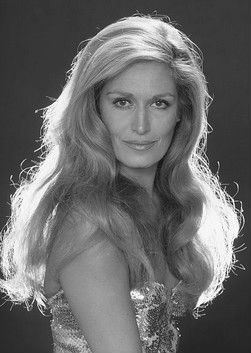
Dalida sold more than 120 million records across a 30-year career, performed in over ten languages, and earned France’s first-ever diamond disc — yet she is perhaps equally remembered for the extraordinary personal tragedies that shadowed every decade of her life. Born Iolanda Cristina Gigliotti in Cairo to Italian immigrant parents, she became the most recognizable French chanson singer of the twentieth century. Her estimated net worth at the time of her death in 1987 was approximately $3 to $5 million.
Quick Facts
- Full name: Iolanda Cristina Gigliotti
- Born: January 17, 1933, Cairo, Egypt
- Died: May 3, 1987, Paris, France (aged 54)
- Nationality: Egyptian-born; naturalized French citizen
- Occupation: Singer, actress
- Languages recorded in: French, Italian, Arabic, Spanish, German, English, Hebrew, Japanese, Greek, Dutch — more than ten in total
- Total records sold: 120+ million worldwide
- Estimated net worth: $3–5 million
Early Life in Cairo (1933–1954)
Iolanda Gigliotti was born on January 17, 1933, in Cairo, Egypt, to Pietro and Filomena Giuseppina Gigliotti — Italian immigrants who had come to Egypt from Serrastretta, a small town in Calabria. Her father Pietro was a violinist; her mother Giuseppina worked as a seamstress. She grew up alongside her older brother Orlando and younger brother Bruno.
Her entry into the world was difficult. Born with a blue, oxygen-deprived complexion, a priest was summoned immediately to perform baptism. At ten months old, she caught a severe eye infection and had to wear bandages for forty days while her father played violin lullabies beside her crib, telling her that her eyes reminded him of Queen Nefertiti. The infection left lasting damage — she underwent eye surgeries at roughly one and a half, again at four, and once more before leaving Egypt. Incorrectly treated strabismus produced debilitating migraines that stayed with her for years, and the thick corrective lenses she wore through childhood made her a target for schoolyard teasing.
World War II brought another blow. When Egypt fell under British wartime influence and Italy joined the Axis powers, Iolanda’s father was taken into custody along with other Italian nationals living in Cairo. He was held for years. When he came home, he was barely recognizable — physically broken, emotionally altered, prone to sudden rages where once there had been warmth. He died in 1945 from a brain abscess, aged just 41. It was a loss Dalida carried for the rest of her life: he returned a stranger, and then he was simply gone.
At sixteen she took a secretarial job at a pharmaceutical company and began entering beauty competitions on the side. In 1954, aged 21, she won the Miss Egypt pageant — a moment she later described not as vanity, but as proof to herself that she deserved more than the confined world around her. When a fashion magazine featured her photo shoot, the engagement she had been in was broken off: her fiancé could not marry someone “shameless.” She took the lesson to heart, left the secretarial desk for good, and signed with the Donna modeling agency.
Around this time she appeared in Egyptian cinema — first in The Mask of Tutankhamun (directed by Marco de Gastyne), then in the musical drama Glass and Cigarette by Niazi Mostafa. She performed under the stage name Dalida, a name that echoed the biblical Delilah while standing apart from it. On December 25, 1954, she boarded a flight for Paris.
Paris: The Making of a Star (1954–1961)
Dalida arrived in Paris with little money and no connections in the French music industry. One of the first people she befriended, on Rue Jean-Mermoz, was a young, equally unknown actor named Alain Delon. The friendship would last decades — and eventually produce the iconic duet Paroles, Paroles.
She began vocal training under Professor Roland Berger, demanding and unsentimental, who booked her into the Villa d’Este cabaret on the Champs-Élysées. From there she worked her way to the newly opened Paris Olympia theatre, where — singing Étrangère au Paradis — she caught the attention of two people who would define her early career: Lucien Morisse, artistic producer at Radio Europe 1, and Eddie Barclay, one of France’s most prominent record producers.
The collaboration that followed produced Bambino in 1956. The song spent 46 weeks in the French top ten, shifted more than 300,000 copies, and remains one of the best-selling singles in French history. Dalida was awarded her first gold disc in September 1957. Her warm, slightly husky vocals — delivered with theatrical conviction — were immediately distinctive, and French audiences responded to them without hesitation.
By the late 1950s she was the most commercially successful recording artist in France. Her face appeared in virtually every Parisian magazine. After an American tour, Ella Fitzgerald’s producer reportedly offered her a deal to stay and record in the US. She declined.
Musical Career and International Success
What made Dalida genuinely unusual among the pop stars of her era was linguistic range. Over a 30-year career she recorded in more than ten languages — often releasing the same song in several versions simultaneously for different regional markets. This wasn’t a gimmick; it was a serious commercial and artistic strategy, and it made her a recognizable name from France to Egypt to Japan.
Her biggest international hits included:
- Bambino (1956) — her breakthrough, a major hit across Europe
- Come prima (1958) — an Italian crossover success
- Gigi l’Amoroso (1974) — reached number one in twelve countries
- Il venait d’avoir 18 ans (1981) — a pan-European chart-topper
- Salma ya Salama — recorded in Arabic, a hit across the Arab world
- Ciao amore, ciao — performed at Sanremo 1967, forever linked to a personal tragedy
- Paroles, Paroles (with Alain Delon) — arguably her most internationally recognized recording
By the time of her death she had earned more than 70 gold records and sold an estimated 120 million records worldwide. In 1981, she became the first artist in France — and one of the first anywhere — to receive a diamond disc, an award created specifically to recognize her unprecedented sales figures. That same year she won the Golden Europa award as Europe’s most popular singer.
In a 1988 poll published in Le Monde and commissioned by the Encyclopædia Universalis, French citizens were asked which personalities had had the greatest impact on French society. Dalida placed second — behind only Charles de Gaulle.
Film Career
Dalida appeared in several films throughout her career, though she always considered herself a singer first. Her most notable screen work:
- Je t’aime (1968) — a lead role
- Le sixième jour / The Sixth Day (1986) — directed by Youssef Chahine, based on Andrée Chedid’s novel. Dalida played a Cairo laundress supporting a paralyzed husband and her grandson during a cholera epidemic. She stripped away every trace of her glamorous persona for the role — no designer clothes, no jewelry, her hair hidden under a turban, nails cut to the quick. Critics took notice. She later said the film helped her reconnect with Yolanda, the person she had been before the stage name swallowed her whole.
Personal Life
Dalida’s private life was marked by devastating loss and a longing for domestic stability that her career seemed structurally unable to provide. Three of the significant men in her life died by suicide — a fact she spoke about publicly and with visible pain.
Lucien Morisse
Her only legal husband was Lucien Morisse, the radio producer who had helped launch her at Barclay Records. They dated for five years before marrying in 1961. The relationship was complicated from the start by his dual role as husband and manager, and by a disagreement over whether to have children. After Dalida began a relationship with Polish artist and actor Jean Sobieski, Morisse filed for divorce. They separated without children. Morisse died by suicide in 1970.
Luigi Tenco
In Italy she met Luigi Tenco, a singer-songwriter she admired both professionally and personally. They performed together at the 1967 Sanremo Music Festival, where their song Ciao amore, ciao was eliminated from the final. For Tenco, who had invested deeply in the competition, the rejection was catastrophic. On the night of January 27, 1967, he shot himself in his hotel room. Dalida found his body.
A few weeks later, overwhelmed by grief and guilt, she attempted suicide herself. Her housekeeper found her in time. The recovery that followed was long and incomplete — she experienced memory lapses and recurring bouts of hearing loss for years afterward.
Richard Chanfray
Her last significant relationship was with Richard Chanfray, a charismatic adventurer who claimed — with theatrical conviction — to be the Comte de Saint-Germain. They were together from 1972 to 1981, nine years, the longest relationship of her adult life. The reasons for their separation were never fully made public. In July 1983, two years after their breakup, Chanfray died by suicide.
Dalida had lost three significant men in her life — Morisse, Tenco, and Chanfray — each by their own hand. She once said publicly that she feared she brought misfortune to those she loved.
Death
In the early hours of May 3, 1987, Dalida took her own life with a barbiturate overdose. She had dressed carefully, applied her makeup, left the lights on, and lay down on her bed. The note she left read: “La vie m’est insupportable. Pardonnez-moi.” — “Life has become unbearable for me. Forgive me.”
She was 54. She had been recording until the previous year, but years of accumulated loss — compounded by declining health and depression — had worn her down completely.
Legacy and Honors
Dalida was buried on May 7, 1987, at the Montmartre Cemetery in Paris. Her funeral drew enormous crowds in what amounted to a public day of mourning.
Her legacy has only grown since. Honors that followed her death include:
- Place Dalida — a dedicated square in Montmartre, established in 1996
- Bronze bust — sculpted by Alain Aslan and installed in Place Dalida in 1997 on the tenth anniversary of her death
- French postage stamp — her face has appeared on official French stamps
- Commemorative wine label — another symbol of her permanent place in French cultural life
- Around 50 biographies written in her name across multiple languages
- The 2016 biographical film Dalida, starring Sveva Alviti, brought her story to a new generation
She remains one of the best-selling female recording artists in history, with total career sales estimates ranging from 80 to 125 million records.
Dalida’s Net Worth
Dalida’s net worth at the time of her death in 1987 is estimated at approximately $3 to $5 million. Her income derived primarily from record sales, international touring, film roles, and commercial endorsements across Europe and the Arab world. Given that her peak commercial years ran from the late 1950s through the early 1980s — during an era of strong physical record sales — the bulk of her wealth came from a traditional royalties-and-touring model.
She owned her Montmartre home, where she lived and died. Her recording catalogue continues to generate royalties decades after her death, supporting an ongoing posthumous revenue stream managed by her estate.
Frequently Asked Questions
What was Dalida’s real name?
Dalida was born Iolanda Cristina Gigliotti on January 17, 1933, in Cairo, Egypt, to Italian immigrant parents.
How many records did Dalida sell?
Dalida sold an estimated 120 million records over her 30-year career. She earned more than 70 gold discs and was the first artist to receive a diamond disc in France — an award created specifically for her in 1981.
How did Dalida die?
Dalida died by suicide on May 3, 1987, from a barbiturate overdose in her Montmartre home. She was 54. She left a note reading: “Life has become unbearable for me. Forgive me.”
Was Dalida ever married?
Dalida married once — to Lucien Morisse in 1961. The couple divorced after a short time and she never remarried, though she had several significant long-term relationships.
Where is Dalida buried?
Dalida is buried at the Montmartre Cemetery in Paris. A bronze bust stands in her honor at the nearby Place Dalida, established in 1996.
What languages did Dalida sing in?
She recorded in French, Italian, Arabic, Spanish, German, English, Hebrew, Japanese, Greek, and Dutch — often releasing the same song in multiple languages for different regional markets simultaneously.