

If you’ve opened a brokerage account in the last few years, you’ve almost certainly been asked whether you want to add cryptocurrency to your portfolio. It’s a reasonable question — but the decision looks very different once you understand what you’re actually buying, how each asset behaves under pressure, and what the regulatory landscape looks like heading into 2026.
This isn’t a case where one is clearly better. Both asset classes have produced generational wealth and wiped out portfolios. The difference comes down to how each one works, what risks you’re taking on, and what role it plays in a broader investment strategy.
The Fundamental Difference: What You Actually Own
When you buy a stock, you acquire a fractional ownership stake in a real company — its assets, its revenue streams, and in many cases its earnings distributed as dividends. That ownership is legally recognized and enforceable. The price is anchored, at least in theory, to the company’s actual performance: revenue growth, profit margins, management quality, and competitive position.
When you buy cryptocurrency, you own a digital asset whose value is driven primarily by supply, demand, and market sentiment. There’s no underlying business generating cash flow and no earnings report to anchor a valuation. Bitcoin, for instance, is designed to be scarce — only 21 million will ever exist — but scarcity alone doesn’t set the price. What does? Whatever enough buyers and sellers agree on at any given moment.
This distinction shapes everything else: how each asset is valued, how it behaves during market stress, and what you can reasonably expect from it over time.
Volatility: The Gap Is Wider Than You Think
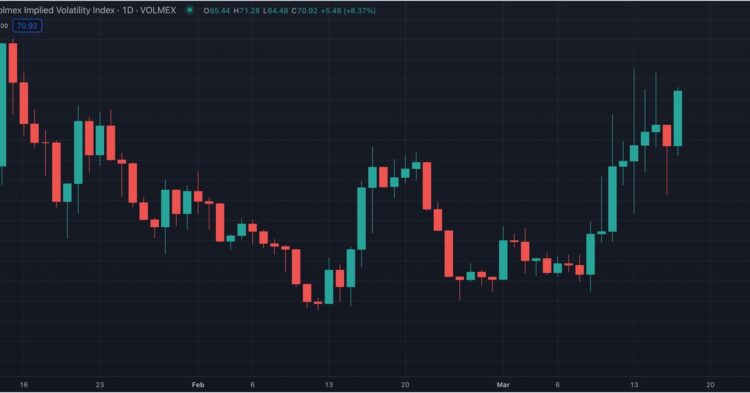
Stocks can be volatile — anyone who held equities through 2008 or March 2020 knows that. But cryptocurrency operates in a different category. Bitcoin, the most established crypto asset, has seen single-day drops of 20% or more, and multi-month drawdowns of 70–80% from peak to trough are part of its historical record.
The 2021–2022 cycle illustrates this clearly. Bitcoin hit nearly $69,000 in November 2021, then collapsed to around $16,000 by late 2022 — a drawdown of roughly 77%. The S&P 500, in its worst stretch of that same period, fell about 25%. These are not comparable levels of risk.
That said, volatility runs in both directions. Bitcoin reached an all-time high of approximately $126,000 in October 2025, up from a price that never topped $0.39 in 2010. The swings are enormous going up as well as down, which is exactly why position sizing and personal risk tolerance matter so much before adding any crypto to a portfolio.
Returns: The Real Track Record
On a long enough timeline, Bitcoin has been one of the best-performing assets in recorded history. A purchase at its 2010 peak price of $0.39 would have grown over 300,000-fold by the October 2025 high. No stock, index fund, or bond has produced anything close to that return over the same period.
The comparison gets complicated quickly, though. Most retail investors didn’t buy in 2010. Many entered near recent cycle peaks, experienced severe drawdowns, and sold at a loss. The average Bitcoin investor’s realized return looks very different from the theoretical maximum.
Stocks, meanwhile, have delivered roughly 10% annualized returns over the long run (S&P 500, before inflation). It’s quieter compounding than crypto’s peaks and valleys — but it’s also more consistent and backed by the actual earnings growth of underlying businesses.
Dividends and Passive Income

Dividend stocks offer something crypto can’t match: a regular cash return regardless of what the price does. Companies like Johnson & Johnson or Procter & Gamble have paid uninterrupted dividends for decades, providing income even when share prices are flat or declining. For retirees or income-focused investors, that floor is genuinely valuable.
Some cryptocurrency platforms offer staking rewards — you lock up a cryptocurrency and receive periodic payments in return. The yields can look attractive at first glance, but they carry risks that stock dividends don’t: platform insolvency (as seen with several major exchanges during the 2022–2023 crypto winter), smart contract vulnerabilities, and the fact that you’re being paid in the same volatile asset you staked. If the token drops 60% while you’re earning a 12% yield, the math doesn’t work in your favor.
Liquidity and Trading Hours
Cryptocurrency markets run continuously — 24 hours a day, 7 days a week, including holidays. You can buy or sell at 2am on a Sunday. Stock exchanges operate within set windows: major US markets run from 9:30am to 4:00pm Eastern Time on weekdays, with limited pre-market and after-hours sessions at reduced liquidity.
For long-term investors, this difference rarely matters. For active traders it can. The always-on crypto market also means flash crashes and sharp price moves can happen at any hour with no regulatory circuit breaker — something stock exchanges have used to pause trading during acute periods of market panic.
Regulation: A Rapidly Changing Picture
This is the area where the most has changed since the early days of the crypto-versus-stocks debate. Crypto’s regulatory status is no longer the free-for-all it was frequently described as.
In January 2024, the SEC approved 11 spot Bitcoin ETFs from firms including BlackRock and Fidelity — a milestone that made Bitcoin accessible through standard brokerage accounts for the first time. BlackRock’s iShares Bitcoin Trust (IBIT) accumulated nearly $45 billion in assets within months of launch, with total spot Bitcoin ETF trading volume exceeding $500 billion in 2024 alone.
In 2025, Congress enacted the GENIUS Act, establishing a regulatory framework for stablecoins, while the Digital Asset Market Clarity Act passed the House, setting up comprehensive oversight for crypto markets. In March 2026, the SEC and CFTC issued a landmark joint interpretation clarifying how federal securities laws apply to crypto assets — establishing clear categories for digital commodities, digital securities, stablecoins, and digital collectibles.
Stocks remain far more comprehensively regulated, with decades of established law covering disclosure requirements, insider trading prohibitions, and investor protections. But the framing of crypto as essentially unregulated is now well out of date.
Tax Treatment: More Similar Than You’d Expect
The IRS classifies cryptocurrency as property, not currency — placing it in the same broad tax category as stocks and real estate. The capital gains rules are effectively identical: hold for under a year and profits are taxed as ordinary income (10–37% depending on your bracket); hold for more than a year and you qualify for the lower long-term capital gains rates of 0%, 15%, or 20%.
The differences are in the details. Trading one cryptocurrency for another — say, swapping Bitcoin for Ethereum — is a taxable event, treated as if you sold the Bitcoin for its fair market value at the moment of the swap. No equivalent rule applies to stock-for-stock transactions in a tax-advantaged account. Additionally, starting in 2025, crypto exchanges must issue Form 1099-DA to report digital asset proceeds, mirroring the 1099-B reporting that stock brokers already provide. Cost-basis reporting on that form begins in 2026.
Stocks also have a structural tax advantage in retirement accounts. You can hold dividend-paying equities in a Roth IRA or 401(k) and defer or eliminate taxes on gains. Bitcoin exposure via an ETF inside a brokerage IRA is now possible — but direct crypto holdings in retirement accounts remain more limited and typically come with higher fees.
Environmental Considerations
Bitcoin’s energy footprint is a legitimate concern, though the picture has grown more nuanced. The Cambridge Centre for Alternative Finance estimated Bitcoin consumed approximately 138 TWh of electricity annually as of 2025 — roughly 0.5% of global electricity consumption. For context, global data centers collectively consume around 200–250 TWh per year.
The energy mix is improving. Roughly 52–54% of Bitcoin mining ran on renewable energy by 2025, driven largely by hydroelectric power. The EU’s MiCA regulation now requires mandatory sustainability disclosures for large mining operations, adding regulatory pressure toward greener practices.
Stocks don’t carry this direct environmental cost at the asset level — though the companies you invest in may have significant carbon footprints of their own. ESG-focused investing tries to screen for this, but methodology varies widely across funds.
How to Access Each Asset Class

Buying stocks is straightforward: open a brokerage account, fund it, and purchase shares. Fractional shares are widely available, so you don’t need hundreds of dollars to own a piece of most companies.
Cryptocurrency used to require a separate exchange account and, if you wanted full control of your holdings, a self-custody wallet. That’s still an option — and for security-minded investors, often the preferred one. But the 2024 ETF approvals changed the access question significantly. You can now get Bitcoin exposure through BlackRock’s IBIT or Fidelity’s FBTC directly within your existing brokerage account, using the same interface you’d use to buy a stock. A spot Ethereum ETF followed in mid-2024.
One protection gap worth knowing: stocks held at regulated US brokerages are covered up to $500,000 by SIPC in the event of broker failure. Cryptocurrency held directly — on an exchange or in a private wallet — carries no equivalent protection. If the exchange becomes insolvent, your claim joins a queue of creditors. This is what FTX customers learned the hard way in 2022.
The Case for Thinking About Both Together

The debate framed as “crypto or stocks” misses how most thoughtful investors actually approach this. The question isn’t which one to pick — it’s what role, if any, a small crypto allocation plays in a portfolio built primarily around equities and other traditional assets.
Financial advisors who include crypto in client portfolios typically treat it as a satellite position, not a core holding — somewhere between 1% and 5% of the overall portfolio. The logic: if Bitcoin continues appreciating, even a small allocation meaningfully lifts total returns. If it collapses, the loss on a 3% position is manageable without derailing the rest of the plan.
One nuance worth flagging: the correlation between crypto and US equities has increased since 2020. During the 2022 market selloff, Bitcoin fell alongside tech stocks rather than away from them, which weakened the diversification case some had made for it. The relationship is still evolving — but investors shouldn’t assume crypto automatically hedges against equity market risk, because the evidence so far suggests otherwise.
Cryptocurrency vs. Stocks: At a Glance
| Feature | Stocks | Cryptocurrency |
|---|---|---|
| What you own | Equity stake in a company | A digital asset |
| Valuation basis | Company earnings and assets | Supply, demand, and sentiment |
| Volatility | Moderate | Very high |
| Passive income | Dividends (many stocks) | Staking rewards (some assets; higher risk) |
| Trading hours | Market hours, weekdays | 24/7 |
| Regulation | Comprehensive (SEC, FINRA) | Developing rapidly (major milestones 2024–2026) |
| Tax treatment | Capital gains rules | Same capital gains rules; more taxable event types |
| Investor protections | SIPC coverage, disclosure requirements | Limited; no SIPC equivalent for direct holdings |
| Environmental impact | Indirect (via company operations) | Direct mining energy use; trending greener |
Frequently Asked Questions
Is cryptocurrency safer than stocks?
No, not in general. Cryptocurrency is riskier across most metrics: larger price swings, thinner regulatory protections, and no underlying business generating cash flow to anchor valuations. That said, “safer” depends on what you’re comparing. A major-market index ETF is substantially less risky than a small-cap growth stock, and both are less risky than most altcoins.
Can I hold cryptocurrency in a retirement account?
Yes, with caveats. The 2024 spot Bitcoin ETF approvals made it straightforward to hold Bitcoin exposure in a standard IRA through your existing brokerage. Some self-directed IRAs allow direct crypto holdings, though fees tend to be higher and custodian options are limited. Ethereum ETF exposure became similarly available through standard accounts in mid-2024.
Do I pay taxes when I trade one cryptocurrency for another?
Yes, in the US. The IRS treats a crypto-to-crypto swap as a taxable disposal of the first asset at its fair market value on the date of the trade. This catches many investors off guard. Keep detailed records of every transaction — the new Form 1099-DA reporting requirements, phasing in from 2025 onward, will make this easier to track going forward.
Does crypto provide diversification from stock market risk?
Less than it once appeared to. Through 2020–2022, Bitcoin’s correlation with US equities — particularly tech stocks — increased noticeably. During broad market selloffs, crypto and stocks have tended to fall together. The diversification argument isn’t dead, but it’s more complicated than early proponents suggested.
Which Is Right for You?
Stocks and cryptocurrency serve different roles and carry different risk profiles. Stocks give you ownership in actual businesses, regulatory protections, and — in many cases — income through dividends. Cryptocurrency offers higher upside potential alongside substantially higher risk, less established investor protection, and a price driven more by sentiment than by fundamentals.
If you’re new to investing, building your foundation in diversified equities first — index funds, broad-market ETFs — before adding a small crypto position is a defensible approach. If you’re already invested in stocks and want crypto exposure without the complexity of managing wallets and private keys, the 2024 ETF approvals now let you do that through a familiar brokerage interface.
Whatever you decide: understand what you own before you buy it, size positions to what you could hold through a major drawdown without panic-selling, and get proper tax advice before your first year of active crypto trading. The asset class has matured considerably — but so has the list of things that can go wrong.