
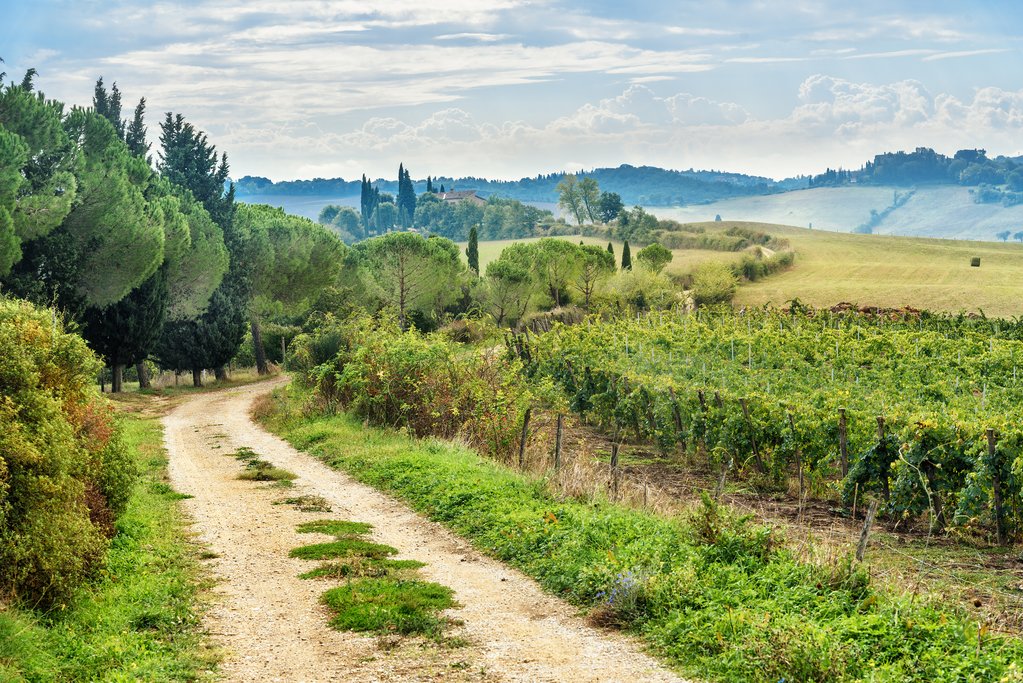
Bologna is the capital of Emilia-Romagna, the region Italians call their food valley, and the city itself wears the nickname La Grassa — “the Fat One” — for the richness of its table. Less talked about, but just as worth your time, is what’s in the glass next to the tagliatelle: the wines of the Colli Bolognesi, the green hills that rise just south of the city.
If you’ve read that Bologna is the “cradle of Italian wine,” set that aside. Italy’s great wine names — Barolo, Chianti, Brunello — belong to Piedmont and Tuscany, not here. Bologna’s wine story is quieter and more local: a crisp, often sparkling white called Pignoletto, a softer style of Barbera, and a regional sea of Lambrusco. This guide covers what those wines actually are, where they come from, and how to taste them on a trip.
What wine is Bologna actually known for?
Bologna’s signature wine is Pignoletto, a fresh white made in the Colli Bolognesi hills. It’s usually served lightly sparkling (frizzante) or fully sparkling (spumante), though a still version exists too. Alongside it, the hills produce a notably soft, fruit-forward Barbera and a handful of reds from Merlot and Cabernet Sauvignon. The wider Emilia-Romagna region is best known internationally for fizzy red Lambrusco, made mostly around neighboring Modena and Reggio Emilia.
So the honest picture is this: Bologna isn’t a powerhouse of collectible reds. It’s a place where everyday, food-friendly wines — bright, low in heavy tannin, often with a bit of bubble — are built to sit beside some of the best cooking in Italy. That’s the point of them, and it’s why they taste better at a trattoria table in the Quadrilatero than they ever will shipped abroad.
Pignoletto: the white of the Bolognese hills
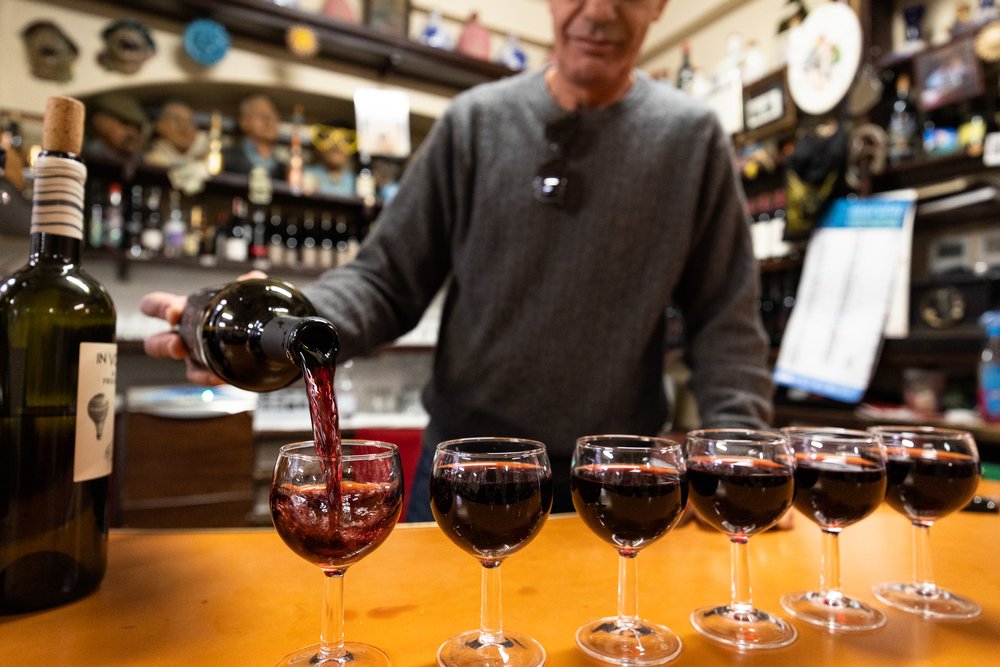
Pignoletto is made from the Grechetto Gentile grape, which has grown in these hills since Etruscan times. The top tier, Colli Bolognesi Pignoletto, was promoted to DOCG status — Italy’s highest wine classification — in 2010. Expect a pale-straw wine with white-flower aromas, a citrusy snap, and a clean, mineral finish.
Most of what you’ll be poured is the frizzante style: gently fizzy, low in alcohol (around 11%), and easy to drink. The minimum blend is 85% Grechetto Gentile, with a little Pinot Nero (vinified as white) sometimes filling out the rest. There’s also a more serious Superiore still version worth seeking out if you like a wine with more structure.
Pair it the way locals do — as an aperitivo, or with the salty, fatty foods Bologna does best: a plate of mortadella, fried crescentine, or Parmigiano Reggiano. The acidity and bubbles cut through richness, which is exactly the job.
The reds: a gentler Barbera, plus Merlot and Cabernet
Barbera is the historic red grape of the Colli Bolognesi, and it shows a different face here than in Piedmont. Bolognese Barbera tends to be softer and more about red-cherry fruit and spice than firm structure — a weeknight red rather than a cellar bottle. Since the 1980s, growers have also planted international varieties; today the Colli Bolognesi DOC covers reds from Merlot and Cabernet Sauvignon, the latter grown on local clay soils for well over a century.
These are honest, mid-weight reds that pair with the region’s meat-forward cooking: ragù alla bolognese over fresh tagliatelle, lasagne, or a slow-cooked bollito. Don’t go looking for a Bolognese Barolo — it doesn’t exist, and that’s fine. The reds here are made to match the food, not overshadow it.
Lambrusco and the wines of the wider region
Step just outside Bologna and the region opens up. Lambrusco — the dry, sparkling red that’s nothing like the sweet stuff exported in the 1980s — comes mainly from Modena and Reggio Emilia, a short train ride away. There are several DOCs worth knowing, including the pale, delicate Lambrusco di Sorbara and the darker, fuller Grasparossa di Castelvetro.
Head east into Romagna and you’ll find the region’s best-known reds and whites: Sangiovese di Romagna, and Albana di Romagna, which in 1987 became the first Italian white wine ever awarded DOCG status. None of these are Bologna wines strictly speaking, but they’re all within easy reach and they all turn up on local wine lists.
How to taste Bologna’s wines: tours and tasting rooms
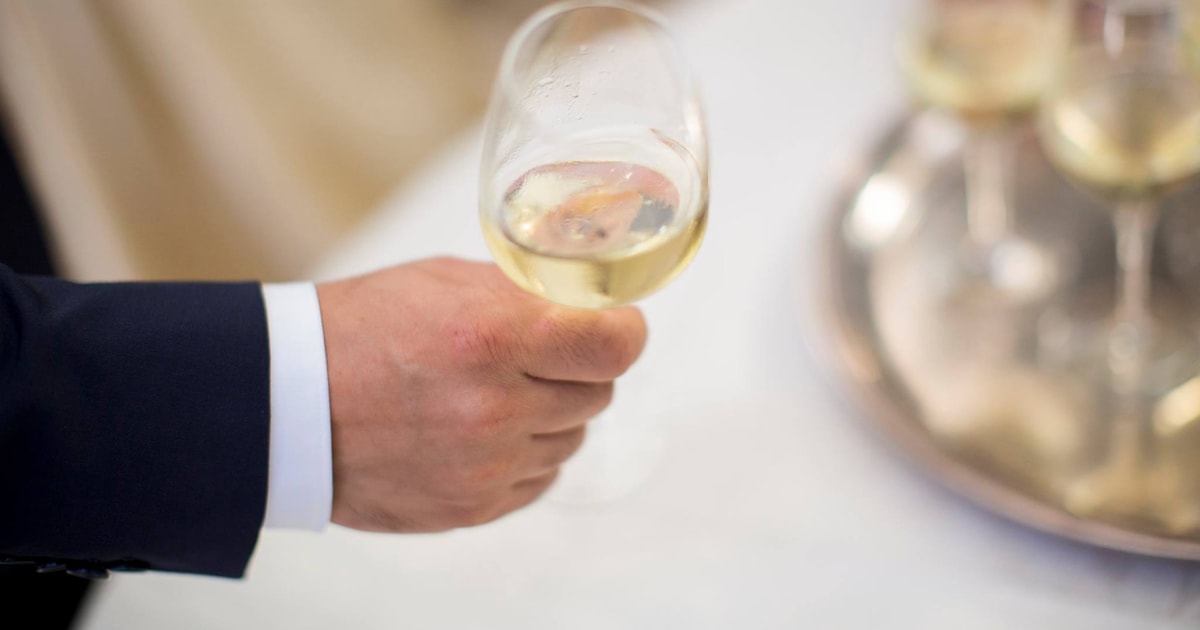
The Colli Bolognesi sit close enough to the city that you can visit a winery and be back for dinner. The hills around Valsamoggia and Monteveglio are the heart of Pignoletto country, and many estates offer cellar tours with tastings paired to local cheese and salumi.
A few practical pointers for planning a visit:
- Book a half- or full-day wine tour from Bologna. Operators on platforms like WineTourism.com run guided trips into the hills that combine cellar visits, tastings, and a food pairing — handy if you’d rather not drive.
- Go in spring or autumn. Summers in the Po Valley get hot and humid; April–June and September–October are far more comfortable for vineyard visits.
- Don’t skip the city wine bars. If you’re short on time, Bologna’s enoteche in the historic center pour local Pignoletto, Barbera, and Lambrusco by the glass — a low-commitment way to taste a range.
- Have an aperitivo. A glass of chilled frizzante Pignoletto with a plate of mortadella before dinner is the most authentic way to start a Bolognese evening.
Frequently asked questions
Is Bologna really the “wine capital” of Italy?
No. Bologna is widely considered Italy’s food capital, nicknamed La Grassa, and it’s the capital of Emilia-Romagna. Its wine is good and very local, but Italy’s most prestigious wine regions are Piedmont, Tuscany, and Veneto. Think of Bologna as a place to drink well alongside extraordinary food, not as a fine-wine pilgrimage.
What wine should I order with Bolognese food?
For aperitivo and lighter dishes, order a frizzante Pignoletto. With ragù, lasagne, or grilled and braised meats, go for a local Barbera or a dry Lambrusco — the acidity and gentle fizz cut through rich, fatty food beautifully.
Is Lambrusco sweet?
Most quality Lambrusco is dry (secco) or off-dry, and it’s a sparkling red. The cloyingly sweet versions that gave it a bad name decades ago are a different, lower-end product. Look for DOC bottles like Lambrusco di Sorbara or Grasparossa di Castelvetro.
Can I do a wine tour from Bologna in a day?
Yes. The Colli Bolognesi are right on the city’s doorstep, so half-day and full-day tours are easy and let you visit a winery or two with tastings and a food pairing before returning for dinner.
The takeaway
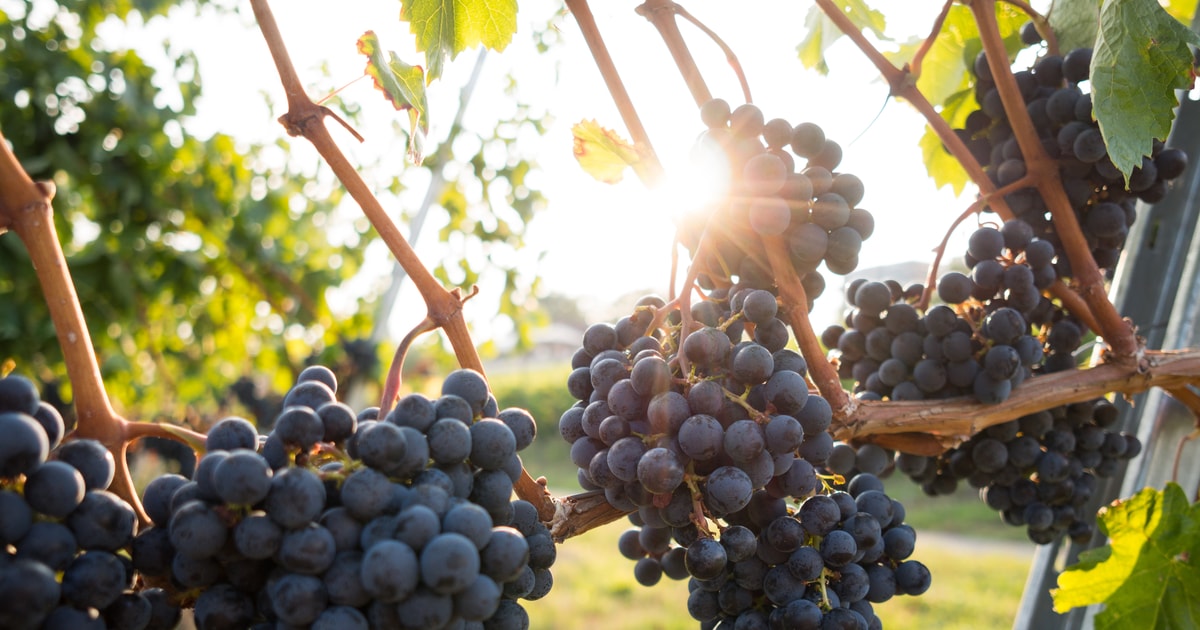
Bologna won’t hand you a famous label to brag about back home. What it offers instead is more useful for a traveler: bright, food-built wines — sparkling Pignoletto, easygoing Barbera, dry Lambrusco from next door — that make sense the moment they hit the table alongside mortadella, tortellini, and ragù. Spend an afternoon in the Colli Bolognesi, then an evening in a city enoteca, and you’ll understand why the people who live in La Grassa drink the way they do.